

My neighbor called me last spring, half-laughing, half-exhausted. Her two-and-a-half-year-old had confidently pointed at a banana and announced it was “blue” — for the third day in a row. She had tried flashcards. She had tried color books. Nothing was landing.
I told her to put the flashcards away.
Color recognition is not something you drill into toddlers. It builds through repetition, play, and the kind of everyday moments most parents barely notice. Once you understand that, teaching colors feels much less like a lesson plan and much more like real life.
This guide walks you through how to teach colors in a way that feels natural, developmentally realistic, and actually useful when you are living with a busy toddler instead of reading theory from a parenting book.
What’s Actually Happening When Toddlers Learn Colors
Parents often assume color learning should be simple. You point at something red, say “red,” and eventually your child says it back. In practice, it is a lot messier than that.
A toddler has to figure out that “red” does not belong to one apple, one toy car, or one sock. It belongs to an entire category of things that may look completely different except for that single visual trait. That is a big mental leap for a young child.
That is why children often seem inconsistent. They may sort red blocks correctly one minute and then call a red cup “green” later in the day. It does not mean they are confused — often the concept is still settling into place.
Matching usually comes before naming
A child can recognize color before they can say the word for it. If your toddler groups blue blocks together or hands you the yellow shirt when asked, that is real progress — even if they cannot label the color yet.
Naming is harder because it requires language on top of visual recognition. So if your child can match colors but not label them yet, that is not a problem. It is the normal sequence.
The timeline is wider than most parents expect
Some toddlers start showing clear interest in colors around 18 months. Others do not consistently name them until well after age 3. That range is broader than many parents realize, which is why comparison tends to create unnecessary stress.
If your child seems uninterested or inconsistent, it does not automatically mean anything is wrong. In most cases, they simply need more exposure and less pressure.
Start at Home, Not at the Craft Store

You do not need a stack of laminated flashcards or a Pinterest-perfect playroom to teach colors well. Most homes already have everything needed. What matters more is how often you use color language in a calm, consistent way.
Narrate what your child already sees
One of the simplest strategies is also one of the most effective: narrate color as part of normal conversation. “Your cup is blue.” “Let’s grab the red towel.” “That truck is yellow.” No quiz. No pressure. Just repetition.
This works because toddlers learn language best in context. When color is attached to real objects they care about, the word has somewhere to stick.
Use fewer colors at first
It is tempting to teach every color at once, but that usually creates noise. Start with a few strong, easy-to-distinguish choices such as red, blue, and yellow. Once those feel familiar, add more.
Think of it like introducing flavors to a child. You do not start with ten spices at once. You begin with clear, simple differences they can actually notice.
How to Teach Colors During Everyday Routines
The easiest teaching moments are already built into your day. You do not need extra time — you just need to use the time you already have a little more intentionally.
At mealtime
Food is naturally colorful, which makes meals one of the best times to reinforce color words. Say “Here are your orange carrots,” or “Can you find the green peas?” without making the meal feel like a lesson.
If your child is in a picky phase, this can actually reduce pressure around food. Instead of focusing on eating, you are simply noticing. “The strawberry is red.” “The banana is yellow.” It turns the table into observation time instead of a power struggle.
While getting dressed
Mornings are full of easy color prompts. “Do you want the blue shirt or the green one?” “Let’s find your white socks.” Clothing gives toddlers the chance to hear the same color words every day in a familiar setting.
Even if your child is too young to answer, hearing those phrases repeatedly helps. Over time, many toddlers start responding before parents expect them to.
During laundry or cleanup
Sorting chores are perfect for color practice because the task itself already involves grouping. Ask your toddler to help find all the blue socks or put all the red toys in one basket. It feels purposeful, which toddlers often like more than random drills.
| Routine | Simple color prompt | Skill it builds |
|---|---|---|
| Breakfast | “Your grapes are purple” | Color vocabulary |
| Getting dressed | “Pick the red shirt” | Recognition and choice-making |
| Laundry | “Find the blue socks” | Sorting and matching |
| Tidying toys | “Put the yellow blocks here” | Color recall in action |
Simple Color Activities That Work Better Than Flashcards
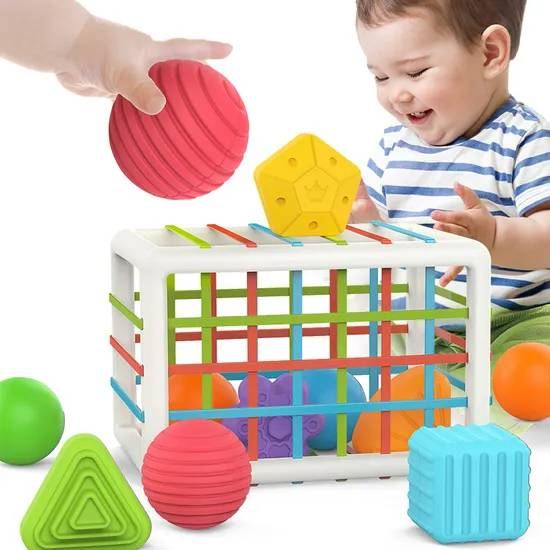
There is nothing wrong with flashcards, but many toddlers learn better when their hands are busy. Real objects feel more meaningful than flat pictures, especially at this age.
The two-bowl sorting game
This one works because it is simple. Set out two bowls or bins and gather a small pile of objects in two clear colors. Ask your child to place each object in the matching bowl. You can use blocks, pom-poms, toy cars, socks, or plastic spoons.
It sounds basic, but it teaches a lot at once: visual sorting, focus, decision-making, and early category building. For a toddler, that is serious learning disguised as a tiny game.
DIY color bins
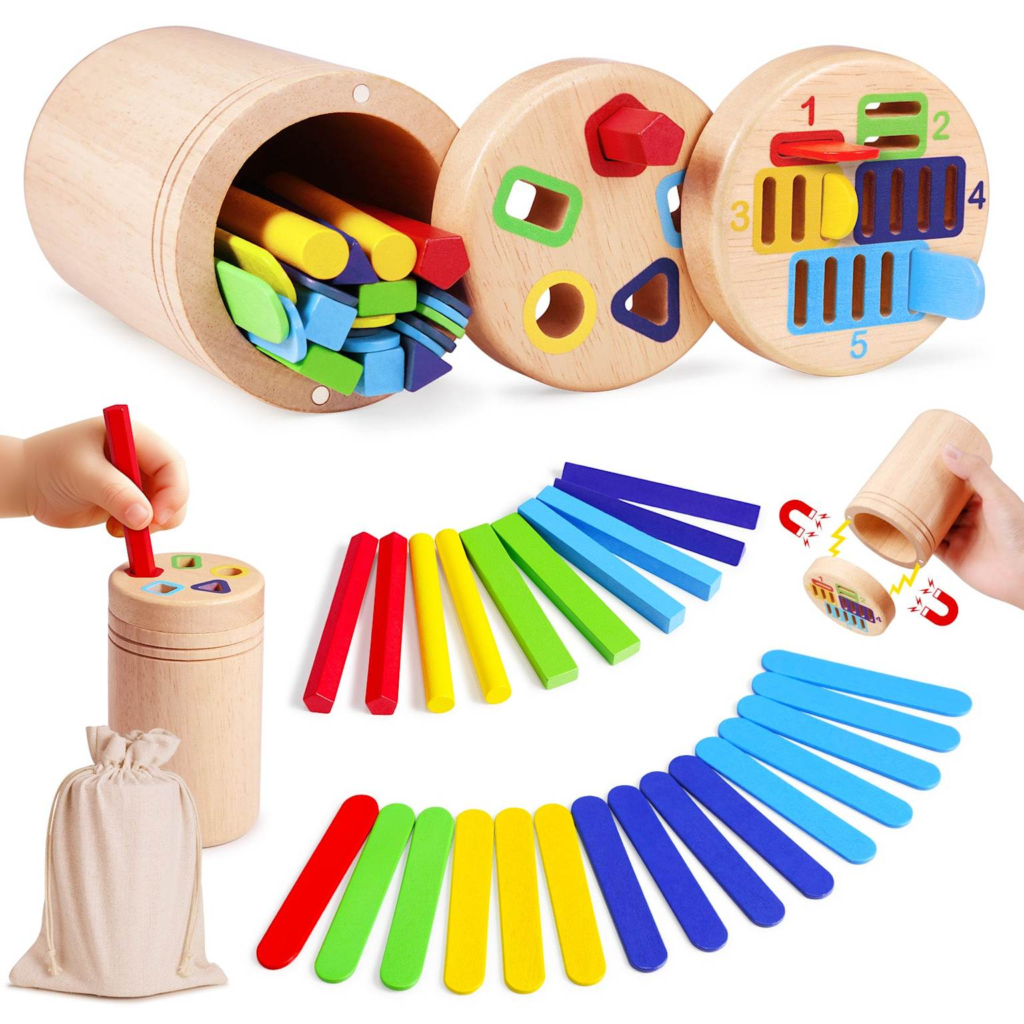
Take a few small containers and make each one a different color category. A yellow bin might have a sponge, a crayon, and a rubber duck. A red bin might have a toy apple, a block, and a ball.
Leave the bins where your child can revisit them on their own. A toddler who returns to an activity independently often learns more than one who only does it when an adult leads the session.
Use Movement If Your Toddler Hates Sitting Still
Some children will happily sort objects at the table. Others last 40 seconds and then crawl under a chair. That does not mean they are not ready to learn — it usually means they need a more physical approach.
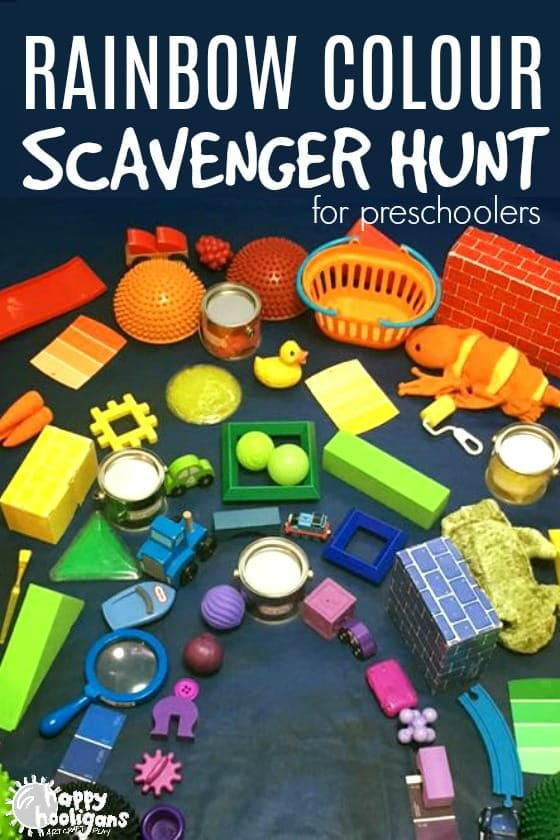
Color scavenger hunts
Pick one color and go hunting around the room or house for matching items. “Can you find three green things?” This works especially well when you join in. Toddlers are more invested when it feels like shared play rather than an assignment.
You can make it silly too. Race to the object. Whisper the clue. Let them “win.” The more alive the moment feels, the more likely they are to remember it.
Color stomp
Lay colored paper squares on the floor and call out a color. Your child has to run, jump, or stomp on the right one. This is especially useful for high-energy kids who learn best while moving.
This kind of game tends to work because it does not feel educational at all. It feels like chaos in the living room — which, for many toddlers, is exactly the right learning environment.
Art Makes Color Feel Real
If you want color learning to click, let your child touch it, mix it, smear it, and see it change. Art gives color a physical experience, and that makes it easier to understand and remember.
Finger painting and color mixing
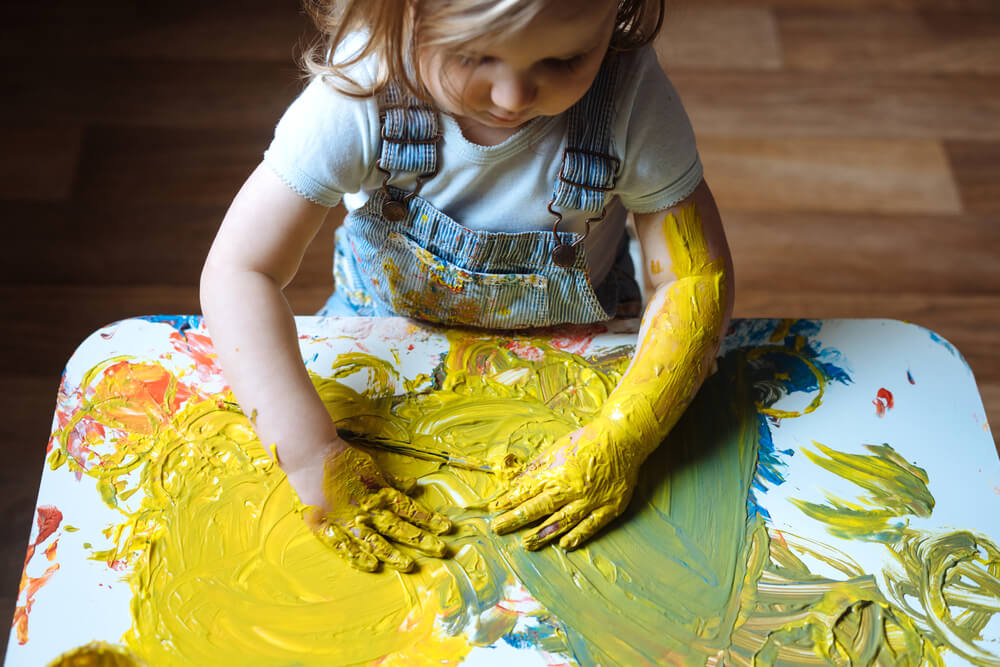
Put out red, yellow, and blue paint and let your child experiment. Watch what happens when yellow slides into blue. That moment — when they realize a new color appears right in front of them — feels like magic to a small child.
Say the color names before mixing, then again after. Keep it simple. The goal is not to teach formal color theory. The goal is to help your child notice relationships between colors.
Collage with paper scraps
Save scraps of wrapping paper, old magazine pages, and colored paper. Ask your child to sort them by color before gluing them onto a page. The sorting gives the activity structure. The gluing gives it payoff. Toddlers respond well when there is something to make, not just something to identify.
Books and Songs Still Help — If You Use Them Well
Books and music can reinforce color learning, but they work best as support tools, not the entire strategy. A toddler who hears a color in a song and then goes looking for it in the room is much more likely to remember it.
Choose books with visual clarity
For very young children, simpler is better. Look for books with bold illustrations, strong contrast, and uncluttered pages. When you read, point and name the color, then connect it back to real life: “That flower is yellow — can you see something yellow in this room?”
Pair songs with action
Color songs can be helpful because rhythm gives words a memory boost. But listening alone is passive. Use the song as a lead-in, then do something physical right after. Sing about blue, then go find blue objects. Read about red, then sort red toys. Hear it, see it, use it.
Common Mistakes Parents Make
- Teaching too many colors at once. A smaller set gives your child a fair chance to notice clear differences before adding more.
- Turning every moment into a quiz. Constantly asking “What color is this?” can make some toddlers shut down. Narration is often more effective than testing.
- Correcting too sharply. If your child gets a color wrong, respond gently. “That one is yellow” lands much better than “No, that’s wrong.”
- Sticking to one teaching style. If table activities are not working, try movement. If movement is chaos, try books or art. Flexibility matters more than consistency of method.
- Expecting instant consistency. Toddlers often understand a concept before they can show it reliably. A few wrong answers do not erase real progress.
Pro Tips That Make Color Learning Easier
- Use identical objects in different colors. Two matching cups in different colors make the color difference easier to isolate than two completely different objects.
- Keep sessions short. Five focused minutes often works better than trying to stretch an activity until your child loses interest.
- Repeat color words naturally. Repetition works best when it feels woven into life, not announced like a lesson.
- Follow your child’s interests. If they love trucks, teach colors with trucks. If they love snacks, use snacks. Interest improves attention every single time.
- Let wrong answers stay low-stakes. A relaxed child will keep trying. A pressured child often stops engaging altogether.
When to Introduce More Advanced Color Concepts
Once your child is comfortable with basic colors, you can start expanding the conversation. Not with formal lessons — just with slightly more specific language in everyday moments.
Shades and light versus dark
Show two versions of the same color together, like a pale blue shirt and a navy one. Talk about which one looks lighter or darker. This strengthens visual discrimination without making things too academic.
Primary and secondary colors
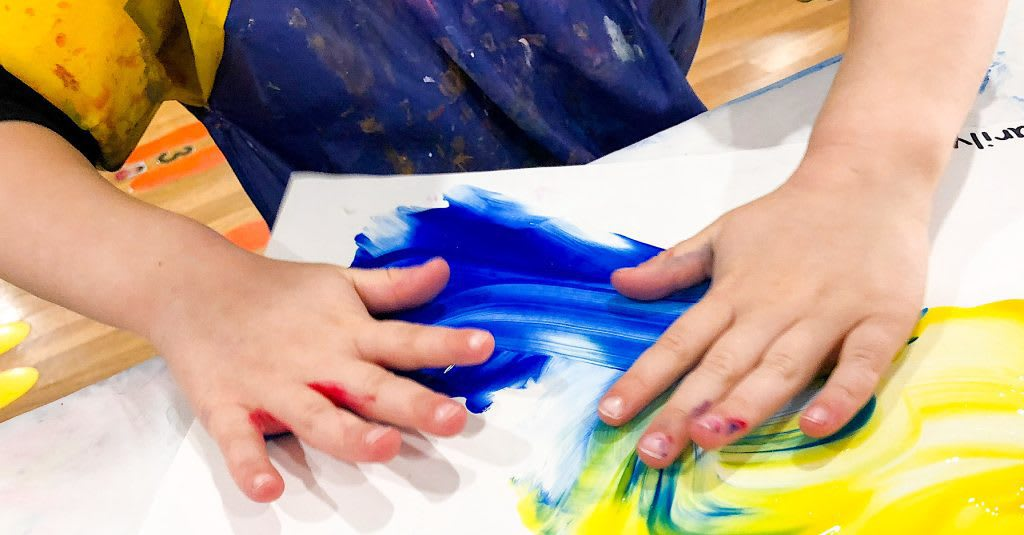
If your child enjoys paint or coloring, this is a natural next step. Show them that red, yellow, and blue can combine to make new colors. It is much more memorable when they see it happen than when they are told to memorize a rule.
| Stage | Focus | Best method |
|---|---|---|
| Beginning | Basic colors (red, blue, yellow) | Naming, matching, sorting |
| Next step | More color variety (green, orange, purple) | Art, books, daily routines |
| Advanced | Shades and mixing | Paint play, side-by-side comparison |
FAQ
At what age should toddlers learn colors?
Many toddlers begin noticing and sorting colors between 18 months and 2 years, but consistent naming often comes later. A lot of children are still figuring it out well into age 3, and that can still be completely normal.
What if my toddler calls everything blue?
That is very common. Young children often latch onto one color word before they understand how to separate categories properly. Keep gently modeling the correct name without turning it into a correction battle.
How many colors should I teach at once?
Start with two or three clearly different colors. Red, blue, and yellow are usually a good place to begin. Once those feel familiar, add green, orange, and the rest gradually.
What if my child does not like learning activities?
Stop presenting them as learning activities. Fold color into whatever your child already enjoys. If they love cars, use cars. If they love bath time, use bath toys. Resistance often drops when the activity feels like theirs instead of yours.
Should I worry if my 3-year-old still mixes up colors?
Not necessarily. Some inconsistency is still normal at that age. If confusion remains strong and persistent over time, or if you notice repeated difficulty with specific color pairs like red and green, mention it at a pediatric visit for peace of mind.
Final Thoughts
The biggest shift for most parents is realizing that color learning does not need to look impressive to be effective. It is usually not the expensive toy or the perfectly planned activity that teaches the concept best. It is the ordinary repetition of hearing, seeing, sorting, and using color in daily life.
So if your toddler calls a banana blue today, do not panic. Smile, hand it back, and say, “This banana is yellow.” Then move on. That calm repetition is often exactly how the learning happens.

Written by
Nouhaila Benis
Hey! I’m Nouhaila a children’s education teacher with over 5 years of classroom experience across multiple countries. She specialises in early literacy and phonics, with one clear goal: helping every child become a confident, independent reader one word at a time. As a full-time blogger, I share with you my best personal experiences.