
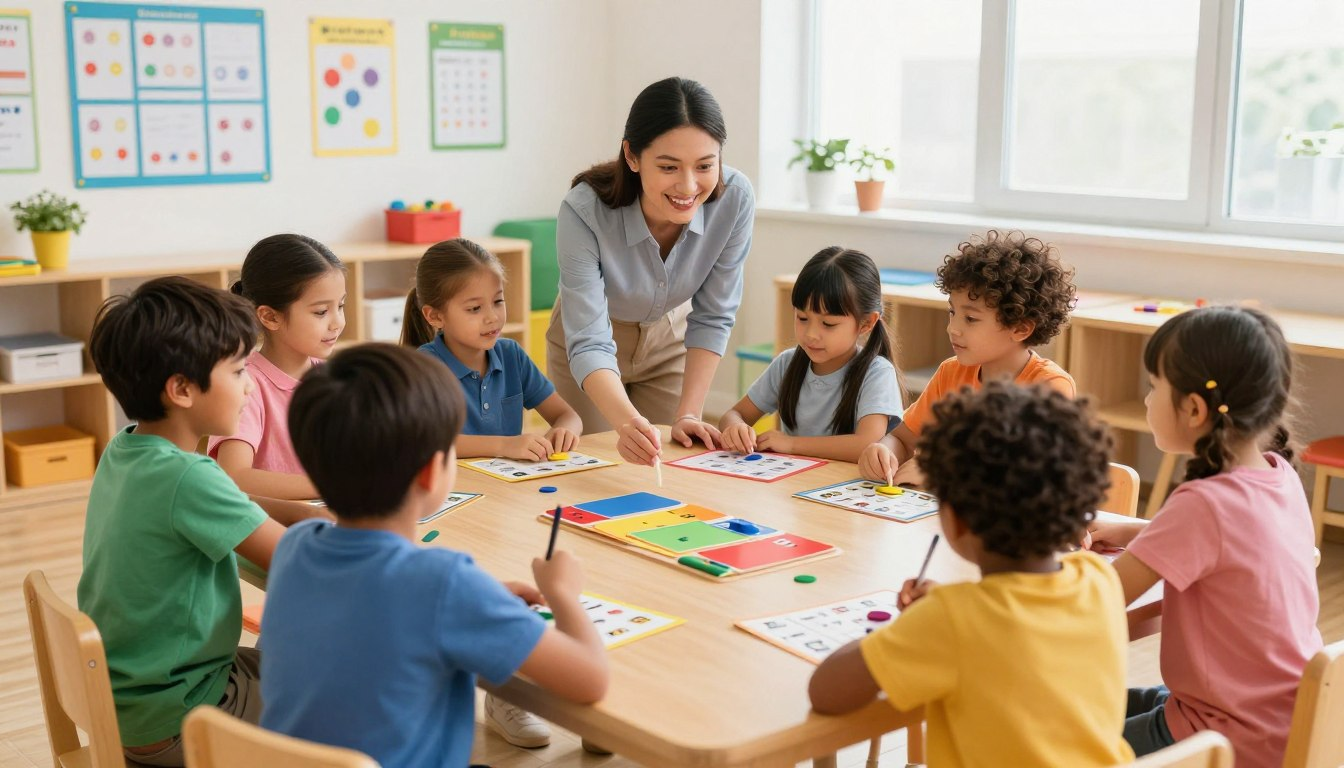
There is a version of homework time that almost every parent recognizes. Your child looks at a page of simple math problems, grips the pencil a little too hard, and suddenly acts like you asked them to decode ancient symbols. The numbers are not the real issue. The pressure is.
That is why math games work so well in first grade. They lower the emotional stakes, increase repetition, and make practice feel like something a child gets to do rather than something being done to them. Research on game-based learning in early childhood has found gains in numeric skills, motivation, and problem-solving — especially when play is age-appropriate and guided by an adult when needed.
If you want your child to feel more confident with addition, subtraction, counting, and number sense, start here. Not with more worksheets. With better experiences.
Why Play Works in Early Math
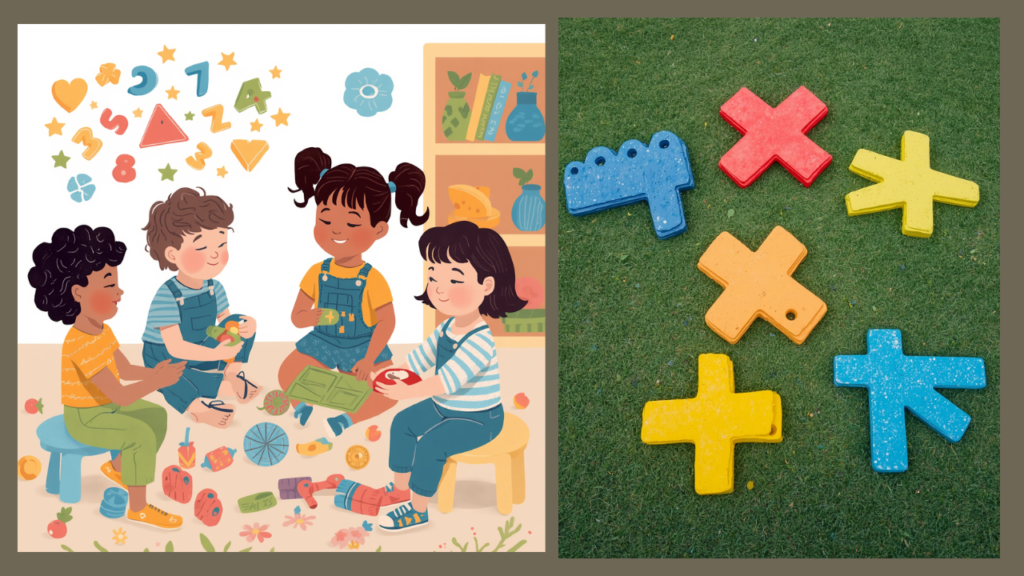
A worksheet asks a child to perform. A game invites them to participate. That difference matters more than adults sometimes realize.
When first graders play a number game, they repeat the same core skills again and again without feeling drilled. They compare numbers, count spaces, solve simple sums, and make quick decisions in context. A 2024 NIH review of game-based learning in early childhood found that these kinds of activities improve early math outcomes while also supporting motivation and perseverance. Other research has found game-based teaching more effective than traditional instruction for several early math concepts, including addition, subtraction, and equality.
There is also the emotional piece. A wrong answer inside a game usually feels temporary. A wrong answer on a graded worksheet can feel final. For many six-year-olds, that difference shapes whether they see themselves as “bad at math” or simply still learning.
Build Number Sense Before Speed
One of the biggest mistakes adults make is pushing fluency before understanding. In first grade, children need number sense before they need speed. They need to understand what numbers mean, how groups work, and what actually changes when you add or subtract.
Use Real Objects First

Beans, buttons, LEGO bricks, coins, cereal, bottle caps — the specific item does not matter. What matters is that your child can touch it, move it, group it, and count it.
Ask your child to make two groups that equal 10. Then ask them to make 10 a different way. Five and five. Six and four. Seven and three. This is number bonds practice — but to a child, it just feels like moving things around on the table. That hands-on approach supports meaningful early math learning better than abstract symbols alone.
Number Lines Help More Than Parents Expect
A lot of first graders can say numbers in order without fully understanding how numbers relate to one another. Number lines make those relationships visible. If a child can see that 8 is two spaces away from 10, addition starts to feel less random.
Even simple number board games help. A 2026 research review reported that short sessions with linear number board games can improve counting, number recognition, and understanding of quantity in young children.
Math Games for 1st Graders That Actually Work
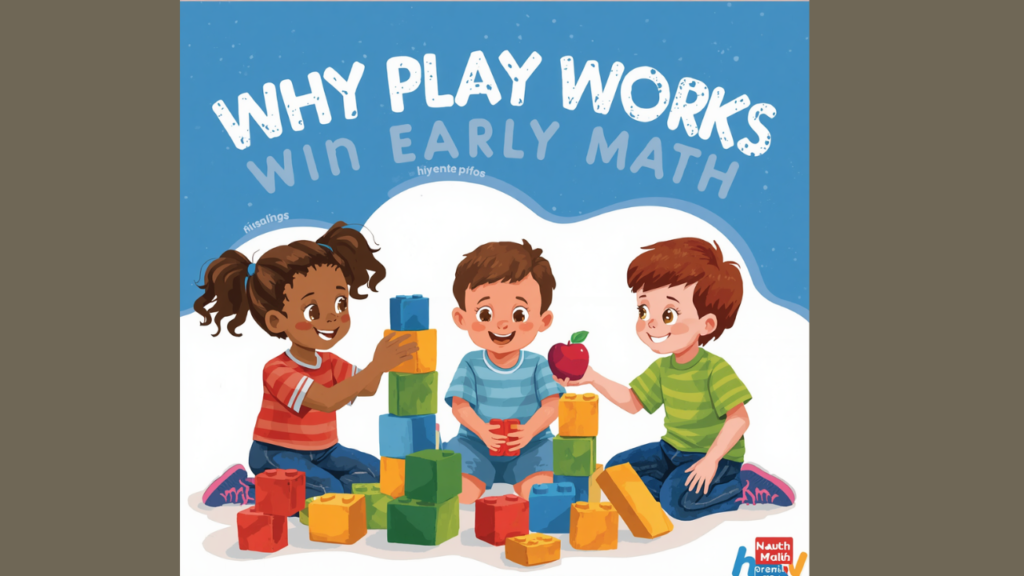
Some games are fun but forgettable. Others quietly build real skill because they give children lots of repetition without boredom. These are the kinds of games worth coming back to.
Addition War with Cards
Take a regular deck of cards and remove the face cards. Each player flips two cards and adds them. The person with the higher sum wins the round and takes all four cards.
This works because it is quick, repetitive, and easy to scale. If your child is still shaky, use one card each. If they are stronger, use three cards or ask them to explain how they got the total. Teachers regularly use card-based addition games because they are simple, flexible, and require almost no prep.
Dice Subtraction Race
Roll two dice. Subtract the smaller number from the larger one. Say the answer out loud before writing it down or moving a game piece.
Dice games help because they create built-in unpredictability. That little bit of suspense is often enough to keep a child engaged through repeated subtraction practice. It also helps children stop seeing subtraction as a frozen page of facts and start seeing it as an action.
Make Ten
Lay cards face up and challenge your child to find pairs that make 10. This sounds basic, but it builds one of the most useful mental math habits a first grader can develop. Once children know their pairs to 10 automatically, everything from addition to place value becomes easier.
Hands-On Math Activities at Home
You do not need a special program to make math practice useful. Some of the best first grade math activities happen in kitchens, living rooms, and backyards.
Counting and Sorting with Household Items
Give your child a pile of dried pasta, beans, or pom-poms and ask them to sort by color, shape, or size. Then count how many are in each group. Then ask which group has more, fewer, or the same.
That one activity covers counting, comparing, classification, and early data thinking. It also feels like play — which is exactly the point.
LEGO Towers for Addition
Ask your child to build one tower with 4 bricks and another with 3. Put them together and count the total. Then do it again with different numbers. LEGO works especially well because children can physically see that two smaller groups become one larger whole — which is exactly what addition means.
Kitchen Math That Does Not Feel Like a Lesson
Set out snack and ask your child to count 6 crackers into a bowl, then add 2 more. How many now? Or start with 10 grapes and eat 3 together. How many are left? These moments show math in context — numbers stop being school-only symbols and start becoming tools for everyday thinking.
| Household Item | Skill Built | Simple Activity |
|---|---|---|
| Dried beans | Counting and subtraction | Count out 10, remove some, count what remains |
| LEGO bricks | Addition and composing numbers | Build two towers and combine them |
| Playing cards | Addition and comparison | Addition War or Make Ten |
| Dice | Subtraction and mental math | Roll and subtract the smaller from the larger |
| Snack items | Counting and one-to-one correspondence | Count, add, or take away during snack |
Teaching Addition Without Turning It Into a Battle
If your child resists addition practice, the issue is usually not laziness. More often, they do not yet have a useful mental model for what addition means.
Draw It Out
Some children need to see a problem before they can solve it. If 5 + 3 feels abstract, have them draw five circles, then three more, and count the total. Drawing slows things down in a good way. It turns a symbol problem into something visible and manageable.
Teach Number Bonds Early
Number bonds are one of the best tools for helping children understand that numbers are made of parts. If a child knows that 8 can be 5 and 3, or 6 and 2, they start seeing flexibility in numbers instead of isolated facts. This is where many first graders make a big leap — they stop counting every single object from scratch and start recognizing patterns.
Subtraction Gets Easier When It Feels Real
Subtraction has a reputation for being harder — and for many children it is. “Putting together” is easier to picture than “taking away.” That is why subtraction needs context.
Use Stories
“There were 7 cookies on the plate. We ate 2. How many are left?” works better than dropping 7 − 2 on a worksheet with no explanation. Story problems make subtraction feel like something happening in the world instead of something invented by adults. Research on informal math games suggests that these real, intuitive numerical experiences can strengthen foundational math abilities over time.
Use Physical Objects
Start with 8 blocks. Remove 3. Ask what changed. Then count what is left. A child who can physically remove objects is much more likely to understand subtraction than a child who is only expected to memorize it.
| Method | Why It Helps | Best For |
|---|---|---|
| Story problems | Adds context and meaning | Children who resist abstract subtraction |
| Physical objects | Makes “take away” visible | Early subtraction learners |
| Dice games | Adds repetition without boredom | Practice and fluency |
| Logic-style apps | Builds focus and problem-solving | Independent practice with support |
Movement-Based Math for Active Kids

Some first graders are never going to do their best learning while sitting still at a table. That is not a problem to fix. It is a clue.
Math Hop
Write numbers on paper and place them on the floor. Call out a problem like 4 + 2, and have your child jump to the answer. Or start on 7 and ask them to jump back 3. This kind of movement-based activity helps children connect numbers to space — which strengthens understanding for many young learners.
Outdoor Math Scavenger Hunts
Ask your child to find three round rocks, two sticks that are the same length, or four leaves. Activities like this support counting, comparing, and shape recognition while keeping energy levels balanced. The beauty of outdoor math is that it does not feel like math. It feels like searching, collecting, and noticing — which is exactly why kids stay engaged.
| Activity | Math Skill | Movement Level |
|---|---|---|
| Math Hop | Addition and subtraction | High |
| Nature Scavenger Hunt | Counting and geometry | Moderate |
| Number Jump Rope | Skip counting | High |
| Swat the Answer | All operations | Medium |
Choosing Digital Math Games Wisely
Math apps can be helpful — but only when they are well-designed and used intentionally. The best ones respond to a child’s level, provide immediate feedback, and keep the child actively thinking instead of passively tapping.
Good first-grade options often mentioned by educators include Khan Academy Kids, Moose Math, and Prodigy for more game-driven practice. The biggest thing to watch for is quality: low-ad environments, age-appropriate design, and activities that reinforce real first grade skills rather than flashy distractions.
A good rule is to pair screen practice with physical practice. If your child used an app to work on addition facts, follow that with a card game or a quick bean-counting activity. That combination helps the learning stick.
Common Mistakes Parents Make
- Moving to worksheets too fast. If a child does not understand the concept with real objects, a worksheet will not fix it.
- Pushing speed before understanding. Fast answers are useful, but only after number sense is solid.
- Correcting too sharply. A child who feels embarrassed stops taking risks. In early math, risk-taking matters.
- Using the same activity every time. Some children need movement. Others need visuals. Others need hands-on tools.
- Mistaking boredom for inability. Sometimes a child is not struggling with math. They are struggling with the format.
Pro Tips
- Keep sessions short. Ten focused minutes is often more productive than thirty resistant ones.
- Stop before frustration takes over. Ending on a win preserves confidence and keeps the next session from starting with dread.
- Let your child explain their thinking. Even a partly correct explanation tells you more than a right answer with no reasoning.
- Reuse the same games with small rule changes. Familiar structure helps children feel secure while new variations keep the challenge alive.
- Name what you notice. “You figured that out faster today” is more useful than generic praise like “great job.”
- Play alongside them. Children engage more when adults are genuinely in the game, not watching from across the table.
FAQ
What are the best math games for 1st graders at home?
Card games like Addition War and Make Ten, dice subtraction games, number board games, and simple counting activities with beans or LEGO are all strong choices. They build real first grade skills through repetition and play without requiring any special materials.
Can math games really improve first grade math skills?
Yes. Research on game-based learning and number board games shows that well-designed math games can improve early numeracy, problem-solving, and motivation — especially when activities are age-appropriate and used consistently.
How long should my child practice math each day?
For most first graders, 10 to 15 minutes of focused math play is enough. Short, regular sessions are usually more effective than long, tiring ones. The consistency matters far more than the duration.
Are math apps better than worksheets?
Not automatically. Good apps can be helpful because they provide immediate feedback and adapt to the child’s level — but they work best when paired with hands-on activities and real conversation, not used as a substitute for both.
What if my child gets anxious during math?
Lower the pressure and go concrete. Use objects, games, and storytelling. Start with easy wins for a week. A child who feels safe is much more likely to engage and improve. The belief “I’m bad at math” is formed through repeated negative experiences — and it gets rebuilt the same way: through repeated positive ones.
Why should I use math games instead of traditional worksheets?
Math games are low-pressure, high-repetition, and emotionally safe. Children solve far more problems in a 15-minute card game than they would on a worksheet — and they finish the session wanting to play again rather than relieved it is over. That emotional difference shapes how children see themselves as math learners for years.
How do I support a child who needs extra time?
Use physical objects consistently, keep sessions pressure-free, and set small goals. If a game feels too hard, simplify it. Adaptive apps can also help here because they adjust automatically without a child feeling like they are being held back. Patience during the plateau is part of the job — progress in early math often arrives in bursts, not steadily.

Written by
Nouhaila Benis
Hey! I’m Nouhaila a children’s education teacher with over 5 years of classroom experience across multiple countries. She specialises in early literacy and phonics, with one clear goal: helping every child become a confident, independent reader one word at a time. As a full-time blogger, I share with you my best personal experiences.