
There is a very specific kind of morning you see in homes with young children. One shoe is on. The other is missing. Someone is asking for the blue cup, not the green one. A four-year-old is telling a long, winding story that somehow involves a dinosaur, a banana, and a trip to the moon. And in the middle of all that noise, real learning is happening.
That is the part many adults miss. Early learning rarely looks impressive from the outside. It looks like block towers that fall over, crayons with the wrappers peeled off, a child asking “why?” six times in a row, and a small argument over whose turn it is. But those ordinary moments are exactly where preschool foundations are built.
If you are trying to support Preschool Foundations (Ages 3–4) or strengthen Kindergarten Readiness (Ages 5–6), it helps to stop thinking only in terms of letters and numbers. School readiness is broader than that. It includes language, early literacy, early math, motor skills, self-regulation, independence, and the ability to function in a group .
This guide breaks those stages down in a practical way, with real-world examples, realistic expectations, and clear ideas you can use at home or in an early learning setting.
What Preschool Foundations Really Mean
When people hear the word “foundations,” they often think of academic checklists. But in early childhood, foundations are more basic and more important than that. They are the underlying skills that help a child participate in learning at all.
A three-year-old who can wait briefly, follow a simple routine, notice patterns, listen to a short story, and ask for help is already building a meaningful base for school. A four-year-old who can sort objects, hold a crayon with growing control, join pretend play, and recover after frustration is doing important readiness work too .
That is why strong early learning programs focus on the whole child. Language, literacy, math, physical development, social-emotional growth, and self-direction all develop together, not in isolation .
Preschool Foundations Ages 3–4
Ages three and four are wonderfully uneven years. Children at this stage often sound older than they are one minute and then completely fall apart because someone broke their cracker in half the next. That inconsistency is not a flaw. It is part of the stage.
At this age, the goal is not polished performance. It is steady growth in the skills that make later learning possible: attention, language, curiosity, memory, motor control, and social participation.
Language grows through conversation, not correction
Three- and four-year-olds build vocabulary fastest when adults talk with them, not at them. That means real back-and-forth conversation: “Why do you think the tower fell?” “What should we build next?” “How did the dog get muddy?” The richest language growth often happens during play, snack, cleanup, and pretend scenarios, not formal lessons .
Children this age also benefit from hearing stories repeatedly. Adults sometimes get bored rereading the same book. Preschoolers do not. Repetition helps them absorb sequence, vocabulary, and story structure.
Early math starts with sorting, comparing, and noticing
At this stage, math should feel physical. Preschoolers learn by touching, lining up, grouping, counting, and moving things around. Matching socks, sorting toy animals, setting out four cups for snack, or comparing which block tower is taller all build early numeracy .
One of the clearest signs of growing math readiness is not reciting numbers perfectly. It is understanding that numbers mean something. When a child gives you three crackers because you asked for three, that is real mathematical understanding.
Fine motor skills matter more than parents expect
Before children can write letters well, they need hand strength, grip control, and shoulder stability. That is why activities like playdough, stickers, beads, tearing paper, painting, tweezers, and block play are not just “fun extras.” They are preparation .
A lot of adults rush to tracing worksheets too early. In practice, many preschoolers need more squeezing, pinching, climbing, painting, and building before pencil work becomes comfortable.
Social-emotional growth is part of the curriculum
Learning to wait, take turns, use words during conflict, and bounce back from disappointment is real school preparation. In a preschool room, a child who can join a group, transition with support, and stay with an activity for a few minutes is building exactly the kind of readiness adults should care about .
These skills are rarely neat. They are learned in messy, repetitive moments: wanting the same tricycle, struggling with cleanup, or feeling upset when the block tower falls. That is normal. That is the work.
Kindergarten Readiness Ages 5–6
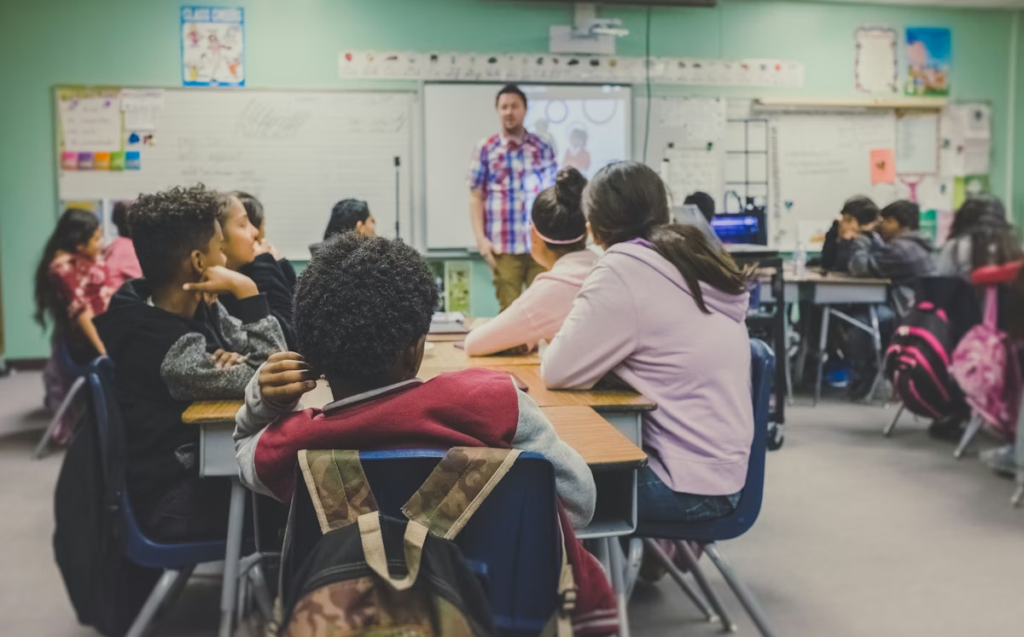
By ages five and six, children are usually ready for more structure. But readiness still does not mean perfection. A child does not need to walk into kindergarten reading chapter books or writing paragraphs. What matters more is whether they can participate, communicate, recover, and keep learning across the day .
Kindergarten readiness includes academic basics, but it also includes self-help skills, listening, persistence, and comfort in a group setting . In real classrooms, those abilities matter every single day.
Early literacy should feel familiar, not forced
Children entering kindergarten benefit from recognizing some letters, hearing rhymes, noticing beginning sounds, enjoying books, and understanding that print carries meaning . That does not require endless drilling.
Practical readiness often looks simple: recognizing their name, turning pages correctly, retelling a favorite story, hearing that “cat” and “hat” rhyme, or noticing the first sound in “ball.” Those are the building blocks formal reading instruction stands on.
Kindergarten math is more than counting aloud
Children around five and six benefit from counting with one-to-one correspondence, comparing groups, recognizing shapes, noticing patterns, and understanding simple quantity relationships . A child who can count to 20 but skips objects while pointing is still developing the concept. A child who carefully counts out six crackers and knows the last number tells “how many” is in a stronger place.
That distinction matters. Kindergarten teachers are not just looking for memorized sequences. They are watching for real understanding.
Independence is an underrated readiness skill
Can your child open a snack container, use the bathroom with minimal help, put on a backpack, follow a two-step direction, and manage basic belongings? Those do not sound academic, but they strongly shape a child’s school experience .
Teachers notice this immediately. A child who can handle small tasks independently has more mental energy available for learning. A child who needs help with every transition starts the day already working harder than peers.
Attention and frustration tolerance matter in real classrooms
One of the clearest readiness markers is not how many letters a child knows. It is whether they can stay with a task, listen in a group, and recover when something feels hard. Kindergarten asks children to wait, shift, respond, and try again constantly.
This is why board games, turn-taking games, cleanup routines, and simple chores help more than they seem to. They build the invisible infrastructure behind classroom success.
The Skills That Matter Most Across Both Stages
| Skill Area | Ages 3–4 Focus | Ages 5–6 Focus |
|---|---|---|
| Language | Speaking in longer sentences, asking questions, following simple directions | Retelling stories, clearer expression, following multi-step instructions |
| Early Literacy | Listening to books, enjoying rhyme, noticing print | Recognizing some letters, name awareness, beginning sounds, story retell |
| Early Math | Sorting, matching, counting small sets, comparing size | Counting with accuracy, shape knowledge, patterning, quantity sense |
| Motor Skills | Crayons, scissors, stacking, climbing, hand strength | Pencil control, drawing shapes, cutting with more purpose, body coordination |
| Social-Emotional | Taking turns, joining play, expressing feelings | Handling transitions, managing frustration, cooperating in groups |
| Independence | Simple routines with support | Basic self-care and classroom-style responsibility |
Common Mistakes Adults Make
- Focusing too narrowly on academics. A child can recite the alphabet and still struggle badly in a classroom if they cannot manage transitions, wait briefly, or ask for help .
- Pushing pencil tasks too early. Fine motor readiness often needs to come before tracing and writing practice .
- Treating play as separate from learning. In early childhood, block play, pretend play, sorting, conversation, and movement are the learning .
- Comparing children too quickly. Development at these ages is uneven. One child may be verbally advanced and motorically immature. Another may be socially confident but slower with early literacy .
- Confusing performance with readiness. A child who performs well in a short one-on-one moment may still struggle with group expectations, stamina, and independence in a classroom.
Pro Tips From Real Early Childhood Practice
- Watch your child during ordinary routines. Some of the best readiness clues show up during snack, cleanup, dressing, and play — not formal activities.
- Read the same books again and again. Repetition builds language, confidence, and story understanding more effectively than constantly introducing new material.
- Use real objects for counting. Preschool and kindergarten math lands better when children can touch what they are counting.
- Build hand strength indirectly. Playdough, spray bottles, stickers, scooping, climbing, and blocks often do more for writing readiness than worksheets.
- Teach independence in tiny steps. Opening containers, putting on a coat, carrying a backpack, and cleaning up after play all matter more than they sound.
- Do not panic over uneven growth. Early childhood development is not tidy. A child can be very ready in one area and still growing steadily in another .
How to Support Learning at Home Without Turning It Into School
The best home support usually looks ordinary. Read aloud every day. Let your child help count apples into a bag. Ask them to retell what happened at the park. Keep crayons, paper, blocks, and books within reach. Practice simple routines until they feel automatic.
If you want one guiding principle, use this: make learning visible, physical, and conversational. Young children do not learn best from long explanations. They learn by doing, repeating, noticing, and talking their way through the world.
FAQ
What are preschool foundations for ages 3–4?
Preschool foundations are the core early skills children build before formal schooling becomes more structured. They include language, early literacy, early math, motor development, social-emotional growth, routines, curiosity, and independence .
What does kindergarten readiness really include?
Kindergarten readiness includes more than academic basics. It also involves self-care, communication, emotional regulation, following directions, working in a group, and basic fine and gross motor skills .
Does my child need to read before kindergarten?
No. Most children do not need to enter kindergarten as independent readers. It is more important that they enjoy books, recognize some letters, hear rhyme and sounds, and understand that print has meaning .
How can I help at home without using worksheets?
Talk often, read aloud, count real objects, sort household items, play turn-taking games, build with blocks, and involve your child in simple routines. Those activities support the same readiness domains teachers care about .
What if my child is strong in one area but behind in another?
That is common in early childhood. Development is uneven, and many children show clear strengths in one domain while still maturing in another. Readiness is not a single line of progress .
Final Thoughts
If you spend enough time around three-, four-, five-, and six-year-olds, one thing becomes obvious: readiness rarely arrives all at once. It shows up in pieces. In the child who suddenly starts retelling stories in order. In the one who finally zips their own jacket. In the one who can count six crackers accurately today after skipping half the objects last month.
That is why the best approach to Preschool Foundations and Kindergarten Readiness is not pressure. It is steady, observant support. Pay attention to the real skills underneath the performance. Build through play, conversation, repetition, and routine. That is what gives children something solid to stand on when school begins.

Written by
Nouhaila Benis
Hey! I’m Nouhaila a children’s education teacher with over 5 years of classroom experience across multiple countries. She specialises in early literacy and phonics, with one clear goal: helping every child become a confident, independent reader one word at a time. As a full-time blogger, I share with you my best personal experiences.