
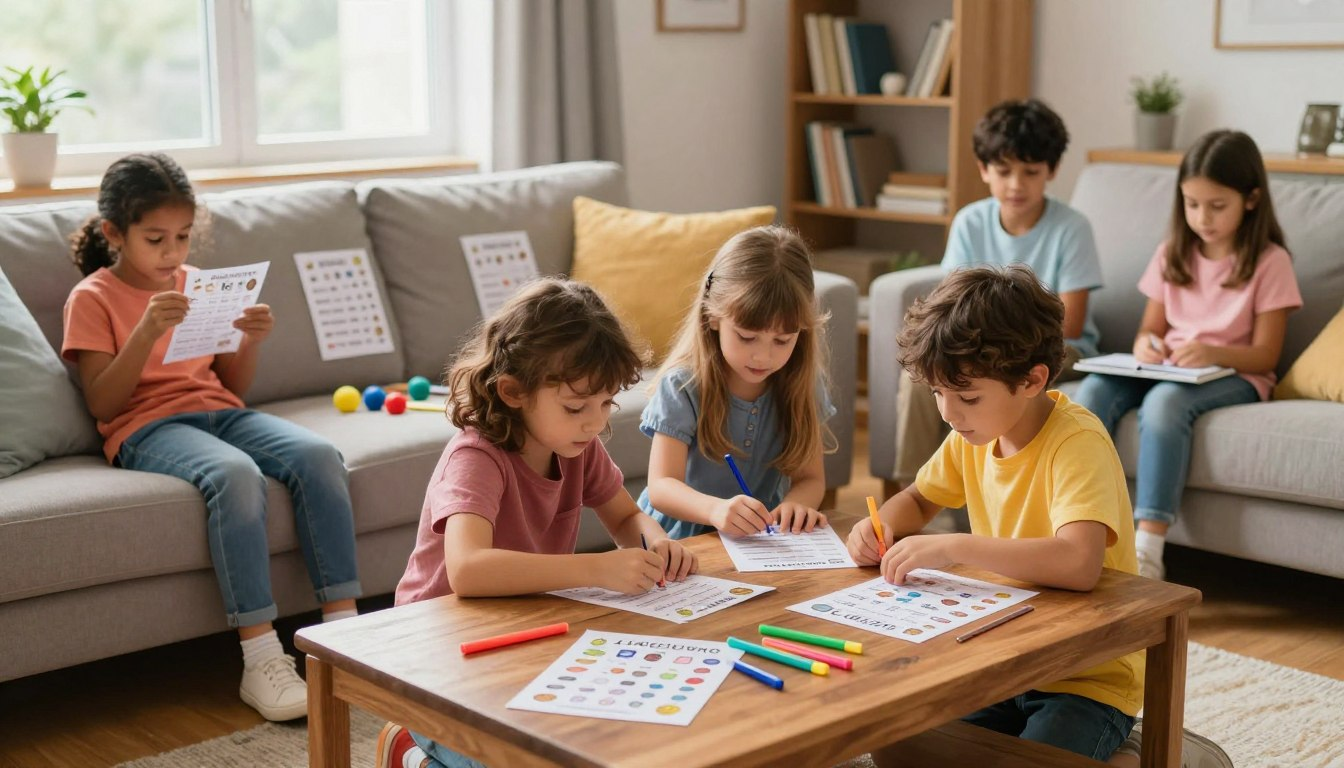
Indoor scavenger hunts do far more than fill time on a rainy afternoon. When they are designed well, they become one of the simplest ways to combine movement, curiosity, reading, observation, and problem-solving in a single activity. A child is not just “looking for stuff.” They are following directions, noticing patterns, making decisions, and learning how to persist when the answer is not obvious.
That is what makes indoor scavenger hunts so useful for parents, caregivers, and teachers. They require very little setup, work in nearly any home, and can be adapted for toddlers, early readers, older children, siblings, or mixed-age groups. You can keep them playful and simple, or turn them into themed learning adventures with clues, riddles, checklists, movement challenges, and small rewards.
This guide explains why indoor scavenger hunts work so well for children, how to plan them for different ages and spaces, what kinds of clues are most effective, how to keep the activity safe and engaging, and how to turn a quick game into a reusable family learning tool.
Why Indoor Scavenger Hunts Work So Well
Indoor scavenger hunts combine several child-development strengths into one activity. They encourage kids to observe carefully, move with purpose, follow instructions, and solve small problems in sequence. That blend matters because children learn best when an activity feels like play but quietly asks them to use multiple skills at once.
They also work because they make an ordinary environment feel new. A living room, hallway, or bedroom becomes a challenge space instead of just a familiar room. That shift in perspective matters for engagement. A child who ignores the room every day suddenly starts noticing colors, shapes, categories, hidden objects, and spatial relationships.
Just as important, indoor hunts are flexible. You do not need a large house, expensive materials, or a fully themed setup. A simple checklist hunt, a picture-based search, or a clue trail taped around the house can work extremely well when the difficulty is matched to the child’s age and the instructions are clear.
The Developmental Benefits
- Observation skills: Children learn to notice details they would normally ignore.
- Problem-solving: Clue-based hunts require them to connect hints with locations or objects.
- Language growth: Riddles, category hunts, and reading-based clues strengthen vocabulary and comprehension.
- Math practice: Counting, shapes, positions, and simple equations fit naturally into clue cards.
- Physical movement: Even in small spaces, kids crouch, reach, walk, climb carefully, and change direction often.
- Persistence: A good hunt teaches kids to keep trying when they do not solve something immediately.
How to Plan an Indoor Scavenger Hunt
A successful hunt starts with three decisions: your space, your child’s age, and the type of experience you want to create. Many indoor scavenger hunts fail because the clues are too hard, the route is too chaotic, or the game asks children to do more than their developmental stage realistically allows.
The easiest way to avoid that is to plan backward. Start with the age of the child, decide how many steps they can handle, and then build the hunt around the rooms and materials you already have. In most homes, a short, well-paced hunt is more fun than a long, complicated one.
Step 1: Assess Your Space
You do not need a large home to create a strong hunt. In fact, smaller spaces often work better because the activity feels manageable and the route is easier to control. Walk through your home before setting anything up and identify safe, clear locations where clues can be hidden without causing mess or frustration.
Useful hiding places include under a couch cushion, beside a lamp, inside a shoe rack, near a bookshelf, taped to a mirror, or tucked behind a door. Avoid fragile shelves, hot appliances, cleaning-product storage, high cabinets, and areas where kids would need to climb unsafely.
Step 2: Match the Difficulty to the Child
This is the most important planning decision. Younger children need short hunts, obvious objects, and visual clues. Older children can handle riddles, sequencing, simple codes, and multi-step clues. If you are planning for siblings of different ages, the best approach is usually a layered hunt: make the core route easy enough for the youngest player, then add bonus challenges for older kids.
| Age Group | Best Hunt Style | Ideal Clue Type | Length |
|---|---|---|---|
| Ages 2–4 | Picture hunt | Photos, icons, color prompts | 4–6 items |
| Ages 5–7 | Simple clue trail | Short rhymes, room hints, matching tasks | 5–8 clues |
| Ages 8–10 | Riddle hunt | Wordplay, categories, directions, counting | 6–10 clues |
| Ages 11+ | Puzzle-based hunt | Codes, logic clues, multi-step tasks | 8–12 clues |
Step 3: Keep Supplies Simple
Most families already have everything they need. Paper, tape, pens, markers, envelopes, and a small final prize are enough. If you like reusing activities, laminated checklist sheets and dry-erase markers make setup much faster the next time.
It also helps to keep a simple “hunt kit” in one place. A folder with printed clue cards, blank templates, markers, stickers, and a few ready-made challenge ideas can turn “I’m bored” into an easy activity in five minutes instead of twenty.
Best Types of Indoor Scavenger Hunts
The strongest indoor hunts usually fall into one of a few simple categories. Choosing the right format is often more useful than trying to invent a complex game from scratch.
1. Picture Hunts for Young Children
This is one of the easiest and most effective formats for toddlers and preschoolers. Instead of written clues, give children a page of pictures or photos showing what they need to find. The items can be common household objects, colors, shapes, or objects from a single room.
Picture hunts work because they remove reading barriers and let young children play independently. A toothbrush image can lead them to the bathroom. A picture of a pillow can send them to a bed. The child feels successful without needing an adult to interpret every step.
2. Color and Shape Hunts
These are ideal for younger children still learning basic categories. Ask them to find something blue, something round, something soft, something square, or something that starts with a certain letter. These hunts feel simple, but they are excellent for classification and visual scanning.
This format also works well in apartments or small homes because it does not require hidden clues. It is fast to set up and easy to repeat with new categories.
3. Riddle Hunts
Riddle hunts are the classic indoor version and work best for elementary-age children and older. Each clue leads to the next location. The satisfaction comes from solving the riddle and feeling the route unfold. A simple clue might point to the fridge, a bookshelf, or a bathroom sink. Older kids can handle layered hints, puns, or clues that require reading carefully.
This type of hunt is especially effective because it combines literacy, reasoning, and movement. It feels more like an adventure than a checklist, which increases motivation.
4. Educational Theme Hunts
Themed hunts turn a simple game into a learning experience. You can build them around science, seasons, books, history, vocabulary, household tools, or even a favorite story. The clue sequence becomes the structure, but the learning theme gives it depth.
- Science hunt: Find items that melt, stretch, roll, or reflect light.
- Nature hunt: Search for leaves, houseplants, rocks, feathers, or nature-themed books.
- Vocabulary hunt: Find objects that match new words or clues with opposites and synonyms.
- Math hunt: Solve a number clue to know how many steps to take or which object number to check.
- Book-themed hunt: Hide clues based on a favorite story’s characters or settings.
How to Write Better Clues
The best clues are not the hardest clues. They are the clues that feel satisfying to solve. If a clue is too obvious, the game feels flat. If it is too vague, the child gets frustrated and loses momentum. A good clue gives just enough information to let the child make a smart guess.
Use Rhymes for Fun
Rhyming clues feel playful and help even simple directions sound more exciting. Younger kids do well with short, concrete rhymes that name the object’s use or location. Older children can handle more abstract wording or a clue that plays with double meanings.
For example, instead of writing “Go to the fridge,” you might write: “I keep your milk and fruit ice-cold. Open my door if you are bold.” The answer is still clear, but the clue invites thinking.
Use Visual Clues for Pre-Readers
If your child cannot read yet, switch from written text to photos, drawn symbols, room icons, or color matching. A photo of the next location is often enough. This keeps pre-readers fully included and avoids turning the game into something they can only do with adult help.
Add Light Learning Without Killing the Fun
Educational elements work best when they are brief and woven naturally into the hunt. A math clue can ask a child to count three chairs and look under the third one. A language clue can ask them to find an object that rhymes with “book.” A shape clue can lead them to something circular.
The goal is not to make the hunt feel like homework. It is to make academic skills feel useful inside a playful challenge.
Printable Checklists and Reusable Formats
Printable scavenger hunt checklists are useful because they reduce setup time and help children track progress clearly. For young learners, a checklist with pictures and boxes to mark is often better than a long sequence of hidden clues. It turns the activity into a visual mission they can complete independently.
You can organize printable lists by room, category, color, or difficulty. For example, one version might ask a preschooler to find “something red, something soft, something you wear.” Another version for older children might include “something transparent, something with a pattern, something that makes sound.”
How to Make Printables More Useful
- Laminate favorite checklists so they can be reused with dry-erase markers.
- Store completed sheets in a folder to track which versions your child enjoyed most.
- Create different levels, such as easy, medium, and challenge mode.
- Use icons for younger kids and text-heavy prompts for older children.
- Keep one no-prep checklist ready for rainy days, sick days, or quiet afternoons.
The best reusable scavenger hunts are the ones that balance novelty with familiarity — enough structure to start fast, and enough flexibility to feel new each time.
How to Keep Kids Engaged the Whole Time
Engagement depends less on decorations and more on pacing. A good indoor hunt has momentum. Kids should solve something, move somewhere, and discover the next step before their attention drifts. Long delays between clues or overly difficult puzzles are what usually cause the game to collapse.
Use Movement Challenges
One easy way to keep energy high is to add tiny physical tasks between clues. A child might do five jumping jacks before opening the next envelope, crawl under a table to reach the clue, or balance on one foot for five seconds before moving on. These small tasks make the hunt feel active even in limited indoor space.
Think About Team Structure
If more than one child is playing, decide early whether the hunt is cooperative or competitive. Cooperative hunts are usually better for siblings because they reduce conflict and let older kids help younger ones. Competitive hunts can work well for parties or confident players, but only when the rules are very clear and the difficulty is fair.
Pairing an older child with a younger one is often the best middle ground. The older child can read clues while the younger child searches or carries the checklist. Both stay involved.
Set Rules Before Starting
Indoor hunts are more fun when the ground rules are simple and clear from the start. Establishing them ahead of time prevents chaos and protects your home.
- No running indoors.
- No climbing on furniture unless an adult says it is safe.
- Respect off-limit rooms or shelves.
- Read clues carefully before moving on.
- If you find a clue in team play, share it with everyone.
Using Technology Without Losing the Magic
Technology can improve an indoor scavenger hunt when it adds interactivity without taking over the game. The point is still movement, observation, and discovery. Digital tools should support the hunt, not replace it.
QR Code Clues
QR codes are a simple upgrade for older kids. Each code can reveal a riddle, a voice note, a joke, a challenge, or the next direction. This works especially well if your child likes mystery games or escape-room style activities.
Photo Hunts
Photo-based scavenger hunts are a smart option when you want less clutter or fewer hidden paper clues. Instead of collecting objects, children take pictures of items that match prompts such as “something shiny,” “something tiny,” or “something with stripes.” This is especially good for older kids and mixed-age groups.
Digital Checklists
If you do not want to print anything, a phone or tablet can display the checklist just fine. This is useful for spontaneous hunts and for families who like to reuse saved templates. For younger kids, though, a physical checklist is still often easier because it stays visible without needing to unlock or hold a device.
Common Problems and How to Fix Them
Even the best-planned hunt can hit problems. The good news is that most issues are easy to solve once you know what they usually mean.
| Problem | What It Usually Means | Fast Fix |
|---|---|---|
| Child gets frustrated quickly | Clues are too hard or too vague | Offer a hint or simplify the next clue |
| Kids lose interest halfway through | The hunt is too long or too repetitive | Shorten it and add a movement task or surprise |
| Too much mess or chaos | Route is poorly contained | Limit play to 2–3 rooms and define off-limit zones |
| One child dominates | Roles are unclear in group play | Assign turns, partners, or shared jobs |
| Game feels flat | No sense of progress or payoff | Add a final treasure, mission, or story theme |
When a Child Gets Stuck
Do not immediately give the answer. Instead, offer a smaller question that points them in the right direction. Ask, “Where do we keep cold food?” or “What in this room is round?” This preserves the sense of success while preventing frustration from building too far.
When the Difficulty Is Wrong
If you realise mid-game that the hunt is too hard, change it immediately. Simplify the next clue, reduce the number of steps, or turn the rest into a picture-based search. Children care far more about momentum and fun than about whether you stick rigidly to the original plan.
When Safety Becomes a Concern
Before each hunt, scan the play space for breakables, sharp corners, slippery floors, and tempting off-limit areas. Clear clutter, block dangerous rooms, and avoid hiding anything in places that encourage unsafe climbing. A scavenger hunt should feel adventurous, not physically risky.
FAQ
What age is best for an indoor scavenger hunt?
Almost any age can enjoy one if the format is adapted properly. Toddlers and preschoolers do best with picture hunts, colors, and simple object searches. Elementary-age children usually enjoy clue trails and riddles. Older kids often prefer puzzle-style or mystery-themed hunts.
How long should an indoor scavenger hunt be?
For younger children, 10 to 15 minutes is often enough. Elementary-age kids may enjoy 15 to 25 minutes. Older children can stay engaged longer if the clues vary and the hunt includes a clear goal or final reveal. In most homes, shorter hunts work better than overly long ones.
Do I need printable materials?
No. Printables are helpful, but not necessary. You can write clues on scrap paper, show a checklist on your phone, or simply call out prompts for a color or category hunt. Printables mainly save time and make the activity easier to repeat.
How do I make the hunt educational without making it boring?
Keep the learning element small and natural. Add one skill at a time: counting, rhyming, vocabulary, colors, shapes, or a simple science idea. The hunt should still feel like a game first. If it starts to feel like a worksheet, the energy drops fast.
What should the final treasure be?
The final reward does not need to be big. A sticker, snack, bookmark, small toy, extra story time, a “movie picker” coupon, or simply the excitement of solving the final clue is usually enough. The treasure works best when it feels like the end of an adventure, not a bribe.
How often can I reuse scavenger hunts?
Very often, especially if you rotate formats. A picture hunt one week, a riddle hunt the next, and a themed checklist the week after will still feel fresh. Reusable templates and laminated clue cards make this much easier.
Final Thoughts
Indoor scavenger hunts are one of those rare activities that are simple for adults but rich for children. They can calm boredom, spark movement, support learning, and create memorable moments without requiring a complicated setup. The magic is not in fancy supplies. It is in the structure: a clear goal, a little mystery, and just enough challenge to make discovery feel earned.
When you match the hunt to your child’s age, protect the pace of the game, and keep the clues satisfying rather than frustrating, your home becomes more than just a place to pass time. It becomes a place where curiosity is rewarded — and that is exactly why kids ask to do these hunts again and again.

Written by
Nouhaila Benis
Hey! I’m Nouhaila a children’s education teacher with over 5 years of classroom experience across multiple countries. She specialises in early literacy and phonics, with one clear goal: helping every child become a confident, independent reader one word at a time. As a full-time blogger, I share with you my best personal experiences.