
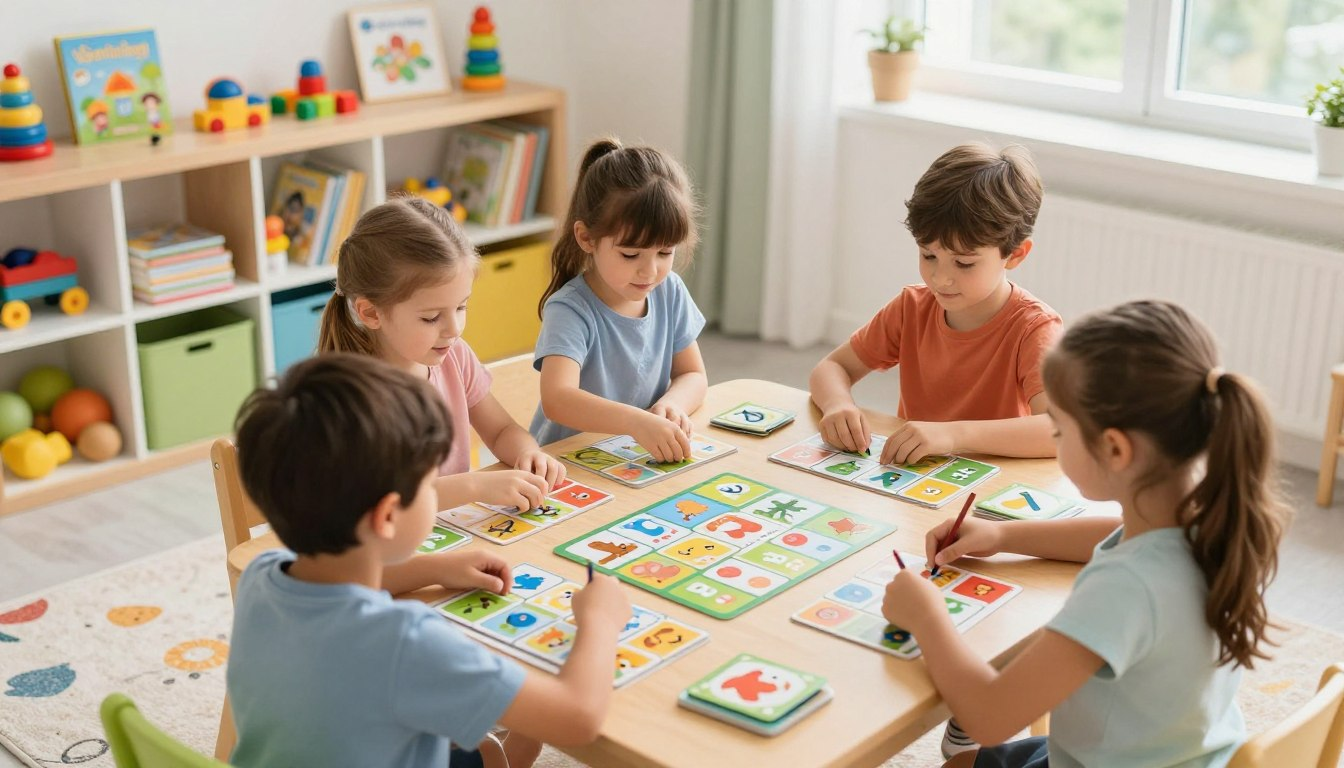
Most parents have played a round of memory card matching with a young child and noticed something unexpected. The child wins. Not because they got lucky. Because they were paying a type of attention that adults have mostly stopped using — slow, patient, genuinely curious attention to each card’s location.
That is exactly the kind of mental engagement that builds something. And the good news is you do not need anything expensive or complicated to make it happen. A deck of cards, a kitchen tray, or a walk to the grocery store is enough.
This guide covers what the research actually says about memory games for kids, which activities are worth doing regularly, how to match games to different ages, and why the best brain-building tool you own is probably already sitting in a drawer somewhere.
What Memory Games Are Actually Doing to a Child’s Brain
When a child plays a matching game, they are not just having fun. They are exercising working memory — the brain’s ability to hold and use information in the moment — along with attention control and visual processing. Research from the University of California found that targeted cognitive games produced replicated improvements in executive function, including working memory, inhibitory control, and cognitive flexibility, compared to children who played unrelated games.
A 2024 systematic review identified several games — including Ghost Blitz, Dobble, Speed Cups, and Bee Alert — as particularly effective for improving inhibitory control, working memory, and cognitive flexibility in children under twelve . The key mechanic in all of them is what researchers call “reveal and react” — stimuli appear and children must quickly respond under changing rules, which forces the brain to hold information, update it, and act on it at the same time.
In simpler terms: the brain grows when it is asked to hold something in mind while also doing something else. That is the cognitive sweet spot that good memory games hit repeatedly.
Working Memory vs. Long-Term Memory
It is worth separating these two because they are different skills. Working memory is short-term, active, and limited — it is what helps a child remember the beginning of a sentence by the time they reach the end. Long-term memory is storage. Most memory games primarily train working memory and visual attention, which then support the kind of sustained focus that helps with reading, following instructions, and learning new material in school.
Card and Tile Games: The Classics That Still Hold Up
Standard picture card matching is not glamorous, but it works. The mechanics are simple: cards placed face down, flip two, remember where you saw what, build a mental map of the grid. That map-building is exactly the kind of active recall that strengthens visual memory.
How to Make Card Matching More Effective
The most common mistake with card games is playing them until the child is bored. A better approach is to keep sessions short — ten to fifteen minutes — and increase the number of pairs gradually as skill improves. Research tracking children from one-item to three-item memory sequences showed that stepped difficulty increases produced significant short-term visual memory gains .
One small addition makes the game more cognitively demanding: ask your child to name the object on the card before flipping the next one. That verbal encoding adds a second memory channel, which helps the location stick .
Moving Beyond Simple Pairs
Once basic matching feels easy, introduce subtle differences — cards where similar images differ by one detail, color sequences where only one tile is out of place, or pattern tiles that require comparing orientation rather than just subject. These variations keep the brain working instead of running on habit, which is when the cognitive benefit drops off .
Memory Games by Age: What Works When
Toddlers: Simple, Tactile, and Short
Toddlers typically hold attention for four to twelve minutes . Any memory activity needs to fit inside that window comfortably. The tray recall challenge works well here: place three to five familiar objects on a tray, let the child look for thirty seconds, cover the tray, then ask what they remember. Start with three objects. Add one item when they can recall the full set consistently.
Color and shape sorting with a short pattern to replicate — red, blue, red — gives toddlers a visual sequence to hold in mind and reproduce. The goal at this age is not accuracy. It is building the habit of paying deliberate attention.
Preschoolers: Add Language and Sequence
By ages three to five, children can start holding verbal sequences alongside visual ones. The storytelling chain game — where each player repeats the growing story and adds one item — trains auditory sequencing, working memory, and vocabulary at the same time . It also requires no materials at all, which means it works at dinner, in the car, or at bedtime.
The grocery list memory game uses the same mechanism in a real-world context. Before a shopping trip, give your child three items to remember. Ask them to recall the list at the store. The context change — being asked inside the shop rather than at home — actually makes recall harder in a useful way, because retrieval in a novel context strengthens memory more than retrieval in the same place where learning happened .
| Age Group | Attention Span | Best Game Format | Key Skill |
|---|---|---|---|
| Toddlers (2–3) | 4–8 minutes | Tray recall, shape sorting | Visual attention |
| Preschoolers (3–5) | 8–12 minutes | Story chains, grocery lists | Auditory sequencing |
| Early school age (5–8) | 10–20 minutes | Card matching, Simon Says | Working memory and inhibition |
School-Age Children: Add Rules, Speed, and Complexity
Children aged five and older can handle games where the rules shift mid-game, where speed matters, or where they have to inhibit an automatic response. Simon Says in its classic form is actually a well-studied inhibitory control task — the child must hold the rule “only respond to Simon says” while resisting the impulse to copy every command. Adding multi-step sequences stretches working memory further .
Obstacle course sequences work on the same principle: give the child a four or five step sequence — crawl under the chair, jump over the pillow, touch the wall, spin twice — ask them to repeat it back before starting, and change the order once they have mastered the original sequence .
Visual and Spatial Memory: The Overlooked Category
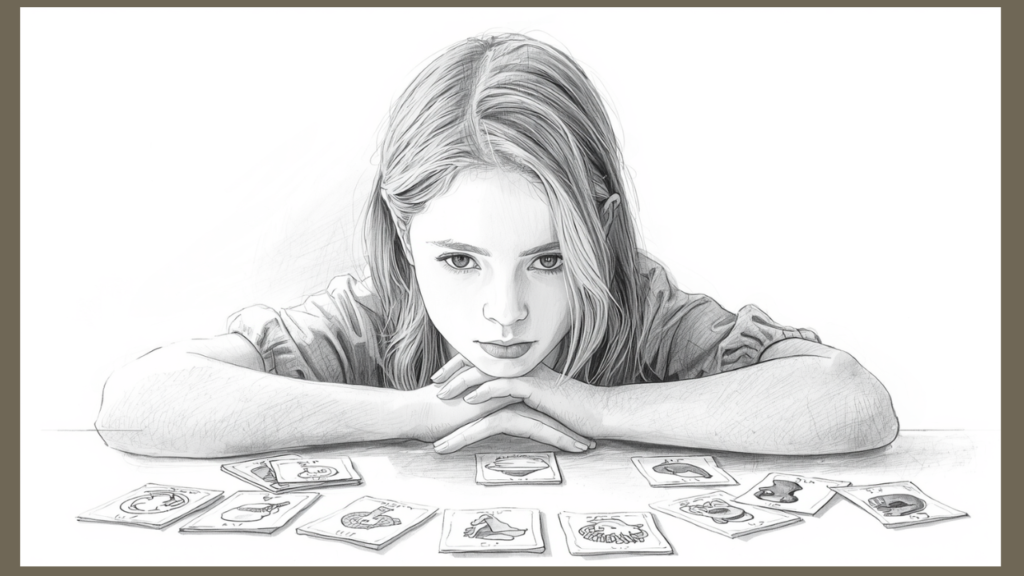
Most parents focus on card games and auditory recall, but spatial memory — the ability to hold and manipulate mental images — is a distinct and trainable skill. Children who develop strong spatial memory tend to perform better in geometry, map reading, and problem-solving that requires visualizing steps .
The Room Scan Game
Ask your child to stand in the middle of a room and look carefully for sixty seconds. Then have them close their eyes or step out. Ask specific questions: how many cushions are on the sofa, which side of the shelf is the tallest book on, what color is the rug near the door. The specificity of the questions matters — vague recall (“what did you see?”) produces vague results. Targeted questions force the child to retrieve particular spatial details .
Drawing From Memory
Show your child a simple object for twenty to thirty seconds. Remove it. Ask them to draw it from memory. Then compare the drawing to the real object together. This builds the link between observation and visual retention, and the comparison step adds a self-assessment layer that young children rarely get to practice. As the skill develops, move from a single object to a simple scene .
Digital Memory Games: When Screens Actually Help
Digital games are neither all good nor all bad for children’s cognition. What matters is the type of engagement. A 2024 study comparing board and digital versions of the same game found that children who played the digital version showed greater improvements in short-term auditory memory, visual memory, and sustained voluntary attention than those who played the board version or a control group . The probable reason is that digital versions can control pacing more precisely and deliver immediate feedback consistently .
The most effective educational apps for memory and attention are those that require active choices, adjust difficulty to the child’s current level, and provide immediate corrective feedback without penalties that discourage continued play . A parent playing alongside — noticing what the child does well, asking about strategy — consistently produces better learning outcomes than a child playing alone .
| Feature | Passive Screen Time | Active Memory Game Apps |
|---|---|---|
| Cognitive engagement | Low | High |
| Working memory impact | Minimal | Measurable |
| Attention effect | Often reduces focus | Trains sustained attention |
| Parent role | Observer | Active facilitator |
Building a Routine That Lasts
The Routine Setup That Works
- Same time, same place — the predictable context cues the brain to switch into a focused state
- One distraction-free zone — background television is one of the most effective attention disruptors during cognitive tasks
- Start below the difficulty ceiling — begin each session with something the child can do well before introducing anything harder
- Increase difficulty gradually — more items, faster pace, or changed rules only once the current level feels comfortable
- Vary the game type — alternating between visual, auditory, and movement-based activities prevents the brain from adapting to one format and coasting
When to Increase the Challenge
The signal to raise difficulty is consistent, relaxed success — not occasional correct answers, but the point where the child is no longer visibly thinking hard. If a game stops feeling like mild effort, it has stopped being training. Games that have become too easy still have social value, but cognitive development requires the brain to work at the edge of its current capacity .
“We found replicated evidence across multiple experiments that playing our games for two hours causes improvements in executive function skills as compared to a control group that played an unrelated game.”
— Richard E. Mayer, University of California, Santa Barbara
Practical Tips That Make a Real Difference
- Name the object aloud when turning a card — verbal encoding adds a second memory channel
- Ask “where do you think it is?” before flipping — the prediction step activates active recall
- Play alongside your child — co-play is consistently linked to stronger learning outcomes
- Resist correcting immediately — let the child discover their own errors when possible
- Use real contexts like shopping, cooking, and walks — real-world recall tasks strengthen memory more than isolated games
- Keep sessions short enough that your child wants to play again tomorrow
FAQ
At what age should I start memory games?
Simple tray recall and sorting games can start as early as age two. The key is matching the game length to the child’s attention span — about four to eight minutes for toddlers — and keeping the number of items very small at first .
How often should we play memory games to see improvement?
Three to four times per week in sessions of ten to fifteen minutes is a realistic and well-supported target. Daily play is fine, but short and consistent matters more than duration .
Do digital memory games actually work?
Research suggests well-designed digital games can improve visual memory and sustained attention, in some cases more effectively than their board game equivalents — likely because of better feedback timing and pacing . The caveat is that a parent playing alongside consistently improves outcomes .
My child always wins at card matching. Should I be letting that happen?
Yes and no. If winning feels easy, the game has probably stopped being cognitively demanding. Add more pairs, use tiles with subtle differences, or switch to a faster-paced game. The brain develops when it is working at the edge of its current capability .
What are the best low-cost memory games to start with?
A standard deck of cards for matching, a kitchen tray with household objects for recall challenges, and the storytelling chain game require no purchase at all and cover visual memory, object recall, and auditory sequencing between them .
How do I know if memory games are actually helping?
Watch for practical improvements rather than game scores: the child follows multi-step instructions more reliably, holds the thread of a conversation longer, or notices details in books and surroundings they would previously have missed. These are the real-world markers that working memory and attention are strengthening .
The best memory game you can give a child is not an app or a specialist toy. It is a parent sitting next to them, paying attention, asking questions, and making it feel like play. That combination — deliberate cognitive engagement inside a low-pressure, positive relationship — is exactly the environment young brains are built to learn from.

Written by
Nouhaila Benis
Hey! I’m Nouhaila a children’s education teacher with over 5 years of classroom experience across multiple countries. She specialises in early literacy and phonics, with one clear goal: helping every child become a confident, independent reader one word at a time. As a full-time blogger, I share with you my best personal experiences.