
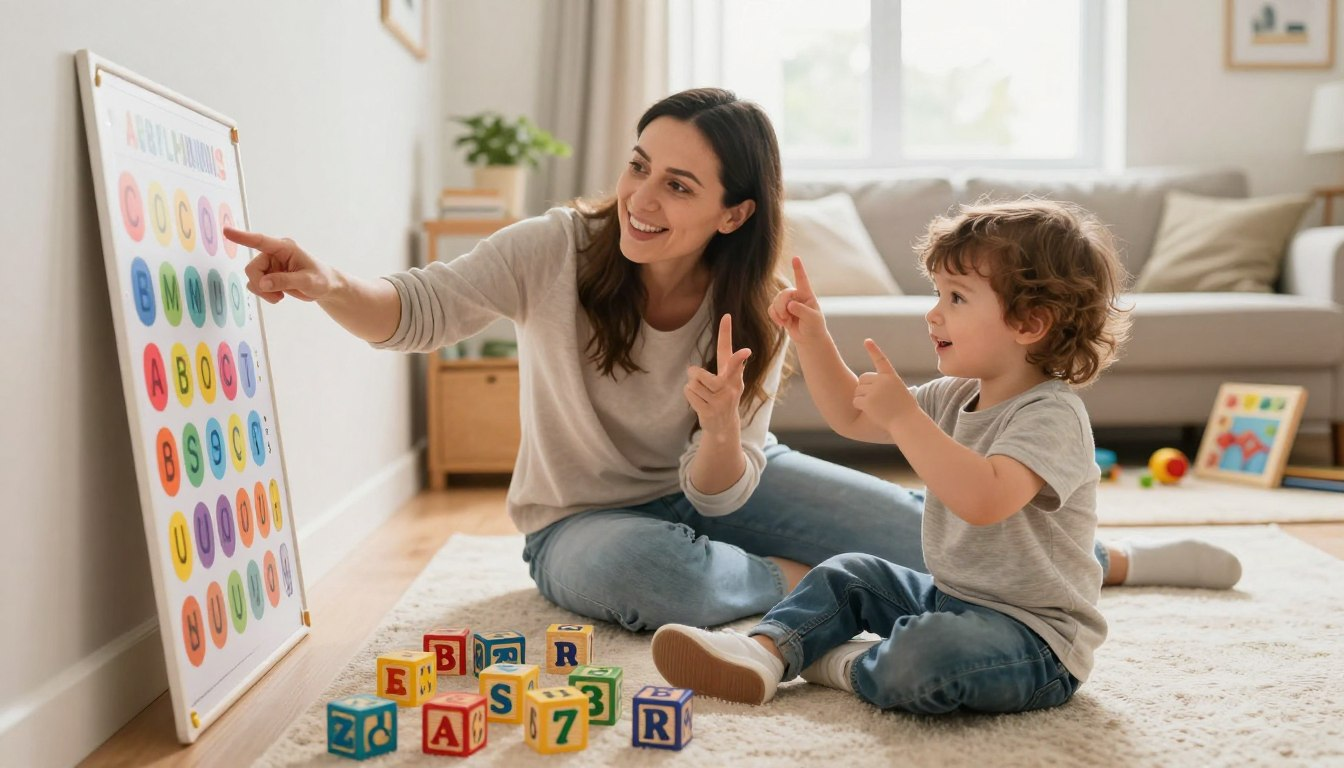
Most three-year-olds already know more about letters than their parents realize. They spot the golden arches of McDonald’s before they can read a single word. They recognize the shape of their own name on a birthday card. They point at the letter on a cereal box and say “that one is in my name.”
That instinct — the pull toward meaningful letters — is the thing you want to build on. Not worksheets. Not flashcard drills. Not sitting at a table for fifteen minutes while your child slides off the chair and stares at the ceiling.
This guide covers what the research and experienced early childhood educators actually say about teaching the alphabet at three: when to start, which activities build genuine letter knowledge, what common mistakes cost time and goodwill, and how to thread letters into daily life so naturally that your child barely notices they are learning.
Is Your Three-Year-Old Ready? What to Look For
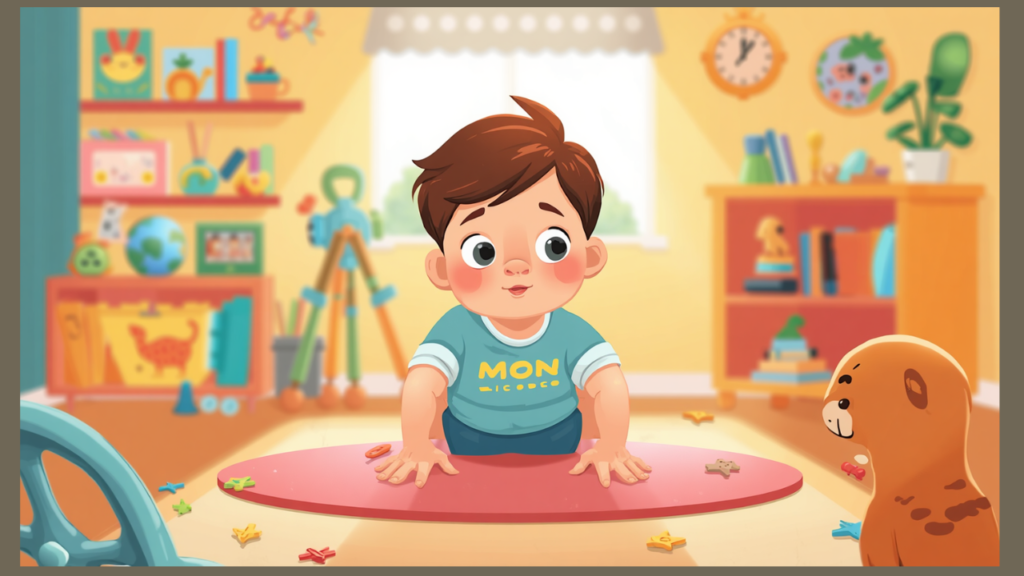
Developmental readiness for alphabet learning is not a fixed age. It is a set of behaviors that show a child is starting to notice that print carries meaning . You do not need a checklist. You need to watch for a few specific things.
Signs that your child is ready for gentle, play-based letter introduction include pointing at words in books and asking what they say, showing excitement when they spot the first letter of their own name on a sign or label, attempting to write by making deliberate marks rather than random scribbles, and asking “what does that say?” when you are out and about .
If your child is not showing these signs yet, the answer is not structured lessons. It is more read-alouds, more environmental print, and more time. Forcing alphabet recognition before a child is ready tends to produce resistance rather than readiness .
Start With Their Name
Almost universally, the first letter a child recognizes is the first letter of their own name . That letter carries personal meaning, which is exactly what makes it stick. Start there. Point it out on packages, signs, and books. Make it a small game: “I spy something that starts with the same letter as your name.” That single letter — deeply understood and personally meaningful — is worth more than a half-learned alphabet recited without comprehension.
The Research Case for Play-Based Learning
Research in child development and neuroscience consistently shows that for children under eight, the most effective approach embeds brief moments of direct instruction inside play-based activity — not the other way around . Children who learn through play develop stronger executive function, deeper conceptual understanding, and better transfer of skills to new situations than children taught through drill and repetition alone .
Play-based learning also builds something formal instruction tends to undermine at this age: a child’s self-image as a capable learner. A three-year-old who associates letters with fun, discovery, and your company is far more likely to remain curious about reading at five and six than one who learned to associate letters with sitting still and getting things wrong .
Which Letters to Teach First

The traditional approach — A, B, C in order — is convenient but not the most effective sequence for building reading readiness. Many early literacy specialists recommend introducing letters in order of utility: letters that appear frequently in simple words and that children can immediately use to build meaningful combinations .
A widely used sequence begins with S, A, T, I, P, N — six letters that can be combined to make over a dozen simple words immediately (sat, sit, pin, nap, tip, tan). This gives a child a sense of agency very early: they are not just learning letters, they are already building words .
For most three-year-olds, though, the letters that appear in their own name are the right starting point regardless of sequence. Meaning drives memory at this age. A personally meaningful letter remembered well beats five abstractly learned letters forgotten by morning .
Activities That Actually Work
Multisensory Tracing: Sand, Salt, and Play-Dough
Before a child can reliably hold a pencil, tracing letters in a tactile medium builds the muscle memory and spatial understanding that eventually makes writing feel natural . Fill a shallow tray with salt, sand, or uncooked rice. Show your child a letter — say its name and sound — then guide their finger through the shape. The combination of touch, movement, and sound creates multiple memory pathways for the same piece of information .
Play-dough works slightly differently: instead of tracing, the child builds the letter from rolled ropes of dough. The construction process — deciding where curves go, how long the straight lines are — requires visual analysis of the letter shape that passive tracing does not .
Letter Hunts: The Activity That Fits Anywhere
Hide magnetic letters around the living room. Hide lowercase versions of the letters in a bowl of dried rice or pasta. Draw a large letter with masking tape on the floor and have your child drive a toy car to it . The specific format matters less than the underlying mechanism: the child is searching for something with a clear visual target, which trains letter recognition more effectively than looking at a stationary card .
Outdoor versions work just as well. Write three letters in chalk and ask your child to find something nearby that starts with each one. At the grocery store, give them one letter to find on packaging as you shop. These real-world hunts connect letters to the environment rather than keeping them confined to learning materials .
Beginning Sound Boxes
Gather five or six household objects that begin with the same letter — a sock, a spoon, a small stone, a piece of string for the letter S. Put them in a small box. Without showing the letter, ask your child to guess the starting sound as you pull each object out. When they identify the sound, show the letter and connect them . This activity builds phonemic awareness — the ability to hear and isolate sounds — alongside letter recognition, which is the most important early literacy skill for eventual reading .
Kinesthetic Letter Walks
Lay out large letters made from masking tape on the floor and have your child walk, hop, or crawl along the lines. Throw paper airplanes at letters taped to the ground . Swat balloons labeled with letters . These activities work particularly well for physically active children who cannot sustain tabletop attention for more than a few minutes, because they use the whole body to encode the same information a worksheet would deliver only to the eyes .
| Activity | Primary Channel | Best For | Materials Needed |
|---|---|---|---|
| Sand / salt tray tracing | Tactile + kinesthetic | Pre-writing muscle memory | Shallow tray, salt or sand |
| Play-dough letter building | Tactile + visual | Shape analysis | Play-dough |
| Letter hunt in rice | Tactile + visual | Letter recognition | Bowl, rice, magnetic letters |
| Beginning sound box | Auditory + visual | Phonemic awareness | Household objects |
| Floor tape letter walk | Kinesthetic | Active learners | Masking tape |
| Environmental print hunt | Visual + contextual | Real-world connection | Signs, packaging, books |
Weaving Letters Into Daily Life
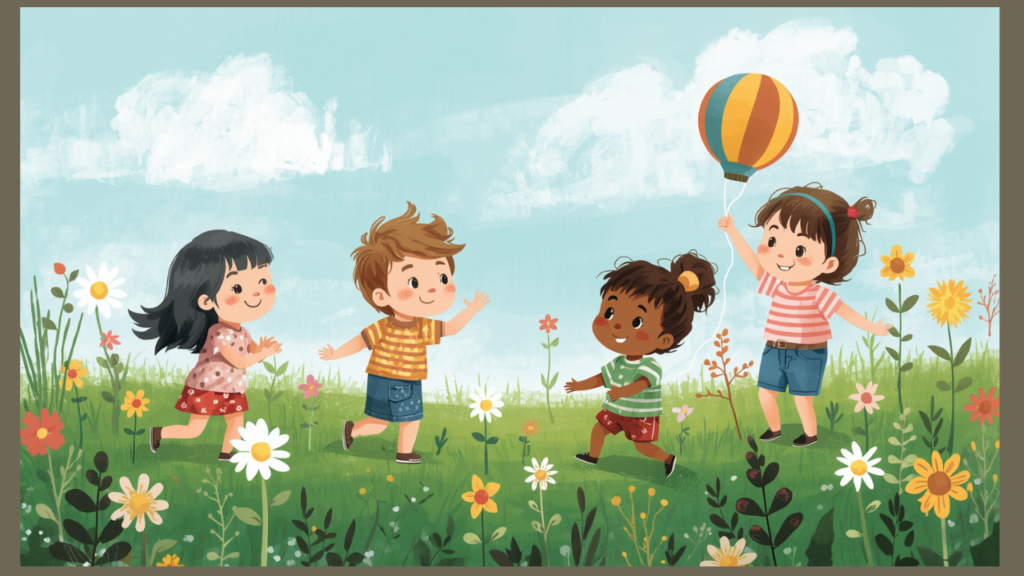
The most effective alphabet teaching is not the dedicated session. It is the fifteen seconds at breakfast when you say “look, that big letter on the cereal box — that’s the same one your name starts with.” Environmental print — the letters already surrounding children on packaging, signs, and labels — is one of the most powerful and most underused teaching tools available to parents, because the letters appear in meaningful, memorable contexts .
Morning Moments
Point out letters on the cereal box, the juice carton, or the toothpaste tube. Do not turn it into a lesson. One observation — “that’s the letter M, same as mango” — is enough. The goal is cumulative exposure over many days, not comprehensive coverage in one sitting .
Read-Alouds With One Added Layer
Daily read-alouds are the single highest-return early literacy activity available to parents, building vocabulary, comprehension, phonemic awareness, and love of books all at once . Adding one letter layer during storytime does not require interrupting the story. After reading a page, ask your child to find a specific letter anywhere on the page — not to decode words, just to spot the shape. That search activates letter recognition without turning reading into a chore .
Songs and Rhymes: Why They Work
The alphabet song teaches letter names through melodic pattern rather than brute memory, which is why children remember it reliably even before they can recognize individual letters. Nursery rhymes build phonemic awareness — the ability to notice that words share sounds — which is the most reliable predictor of early reading success . Neither requires a lesson. Singing in the car, chanting during bath time, and rhyming during walks all count .
Common Mistakes That Slow Things Down
Teaching All 26 Letters Before Any of Them Stick
Racing through the whole alphabet produces shallow familiarity with everything and genuine knowledge of nothing. Five letters known well — recognizable, nameable, and findable in books and on signs — will serve a child better than a half-remembered performance of all twenty-six . Introduce three to five letters at a time. Do lots of varied activities with those letters. Add new ones only when the current set feels easy and automatic .
Correcting Every Mistake
When a child gets a letter wrong and hears an immediate correction, the emotional experience of the moment becomes associated with getting things wrong rather than with discovery. Researchers who study early childhood motivation consistently note that preserving the child’s sense of themselves as a capable learner matters more, at this age, than accuracy . A better response to a wrong answer is a gentle redirect: “that one is close — let’s look at this one again,” rather than “no, that’s not right.”
Confusing Letter Names With Letter Sounds
The letter B is named “bee” but makes the sound /b/. These are different things, and conflating them early creates confusion that takes time to untangle later. When possible, pair the name with the sound every time you introduce a letter: “this is B, and it makes the /b/ sound — like ball, bed, banana” . The sound is what children actually need for reading. The name is useful for talking about letters, but the sound is the functional tool.
How to Tell If It Is Working (Without Testing)
Formal testing is stressful for toddlers and provides less useful information than observation . The signs that matter are behavioral: your child spontaneously points out a letter they recognize in an unexpected place, they ask what a word says when you are reading together, they try to write their name unprompted, they correct you when you name a letter wrong during a game.
These moments of spontaneous application — retrieval that happens outside the learning context — are far more meaningful than correctly naming letters when prompted during a designated practice session . They mean the knowledge is genuinely theirs.
| Progress Signal | What It Means | What to Do Next |
|---|---|---|
| Spots known letter on a sign unprompted | Genuine recognition in new context | Celebrate and add a new letter |
| Asks “what does that say?” | Print awareness developing | Read it and name the first letter |
| Tries to write name without prompting | Strong motivation and readiness | Provide more tactile writing opportunities |
| Confuses similar letters (b/d, p/q) | Normal at age three | Continue play-based exposure, do not drill |
| Shows frustration or avoidance | Pace is too fast or format is wrong | Switch activity, shorten sessions, back off |
Setting Up a Simple Home Learning Space
A designated reading corner signals to a toddler that this is a place where books and letters live. It does not need to be large. A soft rug, a low shelf with five or six accessible books, a small bin with magnetic letters, and good light is enough. The key feature is accessibility — materials the child can reach and use independently without asking .
- Magnetic letters for a fridge door or small metal tray — the most used alphabet tool at this age
- A salt or sand tray for tracing — inexpensive and reusable
- Five to eight board books within reach — variety matters more than quantity
- Index cards for simple letter cards made together, not bought
- Play-dough — always useful, always engaging
FAQ
When should I start teaching the alphabet to a three-year-old?
When your child shows print awareness — curiosity about letters, interest in their own name in writing, questions about what words say. That is the signal to begin gentle, play-based introduction. There is no fixed age, and starting before readiness tends to create resistance rather than accelerate learning .
Should I teach letter names or letter sounds first?
Both matter, but sounds are more functional for reading. The most practical approach is to introduce both together every time you teach a letter: “this is B, it makes the /b/ sound — like ball and bus.” That pairing avoids the confusion of children who know letter names but cannot connect them to sounds .
How long should each letter activity be?
Five to ten minutes is typically the ceiling for a dedicated activity at age three. The more important number is frequency: short, daily exposure to letters in different contexts beats one longer weekly session by a significant margin .
My child shows no interest in letters at all. Should I be worried?
Not at three. Children develop at very different rates in early literacy. The most useful thing you can do is read aloud daily, point out letters in the environment without pressure, and make books and physical letters available. Interest usually follows exposure and positive association .
What is the single most important thing I can do for my child’s early literacy?
Read aloud to them every day. Daily read-alouds build vocabulary, phonemic awareness, comprehension, and love of books simultaneously — and research consistently identifies them as the highest-return literacy activity available to parents of young children .
The three-year-olds who go into kindergarten with the strongest letter knowledge are not the ones who sat through the most structured lessons. They are the ones who spent the most time with books, who played with magnetic letters on the fridge, who went on letter hunts in the grocery store, and who had an adult nearby who made the whole thing feel like a shared adventure rather than a task to complete.

Written by
Nouhaila Benis
Hey! I’m Nouhaila a children’s education teacher with over 5 years of classroom experience across multiple countries. She specialises in early literacy and phonics, with one clear goal: helping every child become a confident, independent reader one word at a time. As a full-time blogger, I share with you my best personal experiences.