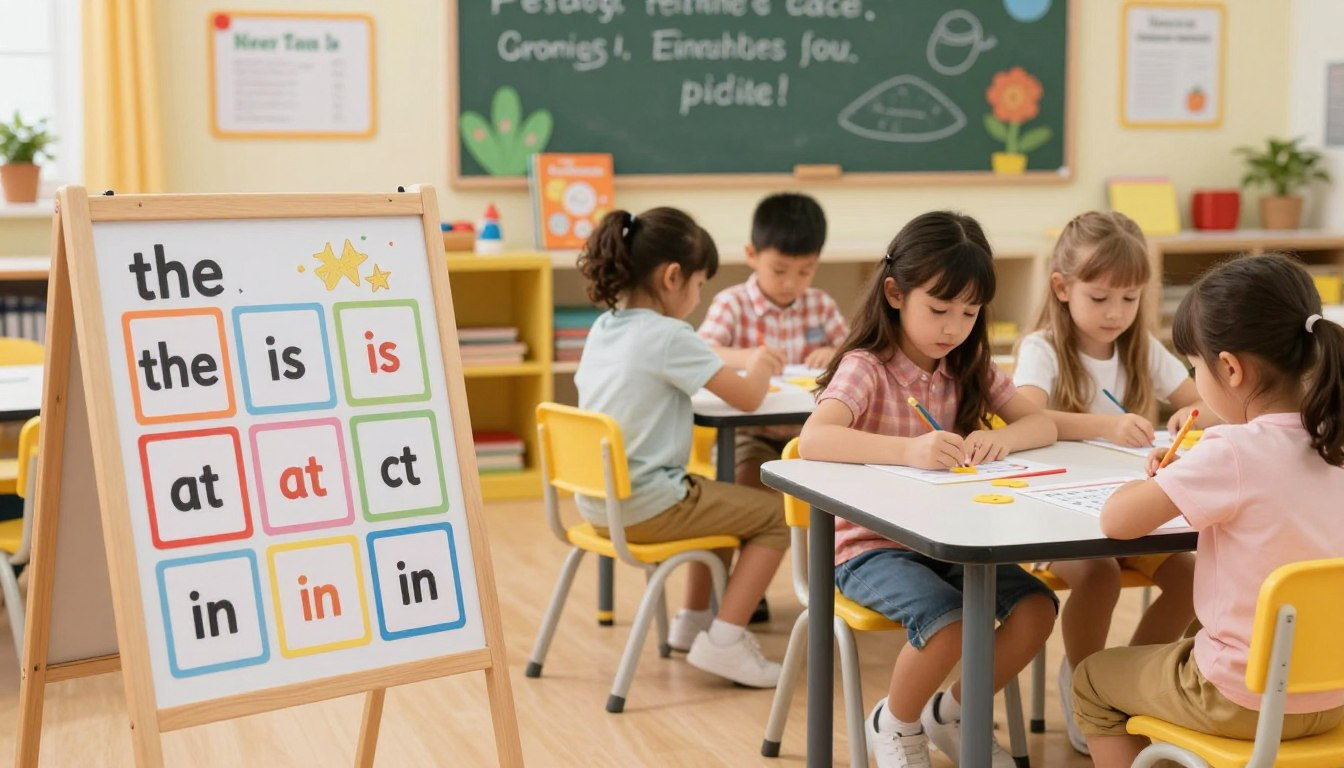
Teaching your child to read high-frequency words is a big step. Experts say learning sight words for kindergarten is a great way to start. It boosts their confidence and reading speed.
When kids know common words, they can understand stories better. A regular routine makes learning fun. We’ll share a simple weekly plan to help your child succeed.
A clear plan makes learning easier. It connects basic sounds to full sentences. Let’s see how to make it work at home.
Key Takeaways:
- Routine Stability: A set weekly schedule helps kids feel calm and remember more.
- Fluency Gains: Knowing common words makes reading sentences easier.
- Confidence Building: Learning these basics helps young readers tackle harder books.
Why Sight Words Matter for Your Kindergartener’s Reading Success
Learning sight words is key for your kindergartener to read well. Sight words are common words in books and writing. Zeba McGibbon says, “Teaching sight words, high-frequency words, trick words, whatever you choose to call them are a key element of early literacy.”
These words are important because they show up a lot in books. When your child knows these words, they can read faster and make fewer mistakes. This is because they don’t have to figure out each word, so they can understand the story better.
The Importance of Sight Words in Early Reading
Sight words are important for many reasons:
- They are often found in books.
- They don’t follow simple rules, making them hard to guess.
- Knowing them helps kids read better.
Here’s how sight words help with reading:
| Benefit | Description |
|---|---|
| Improved Fluency | Recognizing sight words helps children read more smoothly and with better pacing. |
| Enhanced Comprehension | By not having to decode every word, children can focus on understanding the text. |
| Better Confidence | Mastering sight words boosts a child’s confidence in their reading abilities. |
By teaching sight words, you’re building a strong base for your child’s reading. It helps them read easily and understand more complex texts as they grow.
Understanding the Essential Kindergarten Sight Word List
To build a strong reading foundation, knowing the kindergarten sight word list is key. Sight words are common words recognized by sight, not sounded out. They are vital for learning to read and fluency.
There are several sight word lists used by educators and parents. The Dolch Pre-Primer and Primer word lists and Fry’s First 100 High-Frequency Words are two popular ones.
The Dolch Pre-Primer and Primer Word Lists
The Dolch word list includes sight words. The Pre-Primer list has 40 words for pre-kindergarten or early kindergarten. The Primer list adds 52 words for later in kindergarten or first grade.
Research shows 50–75% of early texts use Pre-Primer and Primer Dolch words. Mastering these words is key for early reading success.
| Dolch List | Number of Words | Typical Grade Level |
|---|---|---|
| Pre-Primer | 40 | Pre-K/Kindergarten |
| Primer | 52 | Kindergarten/Grade 1 |
Fry’s First 100 High-Frequency Words
Fry’s First 100 High-Frequency Words are also used to teach sight words. These words are common in English and key for reading fluency.
Fry’s list and the Dolch list share many words but are not the same. Knowing both lists helps in a complete sight word education for your child.
Recommended Learning Pace for Kindergarteners
Children learn sight words at different rates. Introducing a set number of words each week is often suggested. This balance helps in learning new words and remembering old ones.
For kindergarteners, start with 2-3 words per week. This pace helps build their vocabulary without stress or frustration.
By knowing the kindergarten sight word lists and keeping a steady learning pace, you can greatly help your child’s reading growth.
The Proven Weekly Routine for Teaching Sight Words for Kindergarten

Having a weekly routine is key to teaching sight words to your kindergartener. It builds a strong reading foundation. It also keeps your child on track with their learning.
Monday: Introduction and Multi-Sensory Exploration
The week starts with introducing new sight words. This day sets the tone for the week.
Choosing 3-5 New Words Each Week
Choosing the right number of words is key. Introduce 3-5 new sight words each week. This helps your child learn without feeling overwhelmed. Focus on a manageable number for effective learning.
Rainbow Writing and Sensory Tracing Activities
Use multi-sensory activities like rainbow writing and sensory tracing. These activities make new words memorable through different senses.
Tuesday: Recognition Through Flashcard Practice
Tuesday focuses on practicing new sight words with flashcards. This boosts recognition and fluency.
Timed Flashcard Drills
Timed flashcard drills challenge your child’s recognition skills. They improve reading speed and build confidence.
Memory Matching Games
Use memory matching games with sight word flashcards. This activity enhances memory and makes learning fun.
Wednesday: Reading Words in Context
Wednesday focuses on reading sight words in sentences. This helps your child understand word usage.
Simple Sentence Building
Practice building simple sentences with new sight words. This activity improves comprehension and reinforces word understanding.
Decodable Reader Practice
Use decodable readers with the sight words your child is learning. This practical application reinforces knowledge.
Thursday: Writing and Hands-On Reinforcement
Thursday focuses on reinforcing sight words through writing and hands-on activities.
Playdough Letter Formation
Engage your child in playdough letter formation. This tactile activity is both fun and educational.
Sight Word Journals and Worksheets
Encourage your child to keep a sight word journal or complete worksheets. These activities provide extra practice and track progress.
Friday: Assessment and Celebration
Friday is for assessing progress and celebrating achievements.
Progress Tracking with Word Walls
Use a word wall to track sight words learned. This visual progress motivates your child.
Reward Systems That Motivate
Implement a reward system to motivate your child. Celebrating small achievements encourages continued practice.
Best Sight Word Activities and Games for Daily Practice

Make sight word practice fun every day with the right games and activities. Mixing different fun methods helps your kindergartener build a strong reading base.
Sight Word Bingo and Board Games
Sight Word Bingo is a fun way to learn. Create bingo cards with sight words and call them out. This game improves sight word recognition and listening.
Board games are also great for practicing sight words. Many games can be changed to include sight words, making them useful for teaching.
Scavenger Hunts and Movement Activities
Scavenger hunts are fun and get your child moving. Hide sight word cards around and have them find them. This activity mixes learning with physical activity.
Movement activities like jumping jacks can be used with sight words. Say a word and have your child do an action if they know it.
Digital Games and Educational Apps
Today, there are many digital tools for sight word practice. These apps and games offer interactive fun and quizzes for different learning styles.
Popular educational apps have many sight word games. They can help your child learn at their own pace. These digital tools are great for extra learning.
Printable Sight Word Worksheets for Extra Practice
Printable worksheets are great for extra practice. They can have tracing, writing, and identifying sight words in sentences.
| Activity Type | Description | Benefits |
|---|---|---|
| Sight Word Bingo | Create bingo cards with sight words and call them out. | Enhances sight word recognition and listening skills. |
| Scavenger Hunts | Hide sight word cards around the house or yard. | Combines physical movement with sight word practice. |
| Digital Games | Utilize educational apps and online games. | Caters to different learning styles and is engaging. |
| Printable Worksheets | Include tracing, writing, and identifying sight words. | Provides extra practice and reinforces learning. |
By adding these activities to your daily routine, sight word practice can be fun and effective for your kindergartener.
Building Your Complete Sight Word Teaching Toolkit

To teach sight words to your kindergartener, you need a fun and engaging toolkit. This toolkit will help create a learning environment that supports your child’s reading growth.
You might already have what you need at home. Start by looking for items you can use for sight word practice.
Essential Materials You Already Have at Home
You don’t have to spend a lot to make a great sight word teaching toolkit. Many things you have at home are perfect. For example, you can use:
- Index cards or cardstock for flashcards
- Markers or colored pencils for writing and decorating
- Scissors for cutting out words or creating word cards
- Glue or a glue stick for word-building activities
- Old magazines or newspapers for scavenger hunts
These common items can help you create fun activities for your child.
Creating Effective Sight Word Flashcards
Sight word flashcards are great for teaching your child. Here’s how to make them:
- Use clear, large print that’s easy for your child to read
- Write one word per card to avoid confusion
- Use different colors or decorations to make the words more engaging
- Keep the cards handy for quick practice sessions throughout the day
Place the flashcards in a spot where your child will see them often. Like near their bed, as a reminder to practice before bed.
Free Printable Resources and Templates
There are also free printable resources and templates online. They can add to your sight word teaching toolkit. You can find:
- Pre-made sight word flashcards and worksheets
- Word search puzzles and crossword games
- Activity sheets for tracing and writing sight words
- Themed worksheets that match your child’s interests
These resources can be tailored to fit your child’s learning style. This makes sight word practice more fun and effective.
Troubleshooting Common Sight Word Learning Challenges
Teaching sight words can face some common hurdles. Every child learns at their own speed. Knowing these challenges helps you tackle them well. We’ll look at ways to beat practice resistance, help struggling learners, stay consistent, and blend sight words with phonics.
What to Do When Your Child Resists Practice
Many parents face the challenge of practice resistance when teaching sight words. Make learning fun and engaging. Use games, activities, and multi-sensory methods in your daily routine.
- Use sight word games like Bingo or Scavenger Hunts to make practice enjoyable.
- Incorporate multi-sensory activities that involve visual, auditory, and kinesthetic learning.
- Make use of digital tools and educational apps to provide a change of pace.
Helping Struggling Learners Master Difficult Words
Some kids find certain sight words hard. To help them, try these strategies:
- Give extra practice with flashcards or worksheets.
- Use mnemonics or associations to remember tricky words.
- Practice reading the words in different contexts to improve recognition.
| Strategy | Description | Example |
|---|---|---|
| Extra Practice | Using flashcards or worksheets to reinforce learning | Creating flashcards with the sight word on one side and a sentence using the word on the other |
| Mnemonics | Creating associations to help remember tricky words | Associating the word “the” with a picture of a “theater” to aid memory |
| Contextual Reading | Reading sight words in different contexts | Using books or sentences that include the sight word in various settings |
Maintaining Consistency Without Burnout
Keeping up with sight word teaching is key but can be hard. Here are some tips to avoid burnout:
- Set a routine that works for you and your child.
- Keep practice sessions short and focused.
- Mix up the activities to keep things interesting.
Integrating Sight Words with Phonics Instruction
Combining sight words with phonics boosts reading skills. This mix helps your child understand reading better.
For example, use phonics to decode new words. Rely on sight word recognition for common words. This balanced method makes your child more confident and skilled in reading.
Conclusion
Teaching sight words to kindergarten kids can really help them read better. By setting aside time each week, you can introduce new words. This practice makes learning fun and helps them get better at reading.
There are many ways to make learning sight words exciting. You can use flashcards, play scavenger hunts, or try digital games. These activities make learning fun and boost your child’s confidence in reading.
Keep up the good work and stay patient. With the right approach, your child will learn to read sight words well. This will help them love reading for the rest of their life.
FAQ
Q: What are sight words for kindergarten and why are they so important?
A: Sight words for kindergarten are common words like “the,” “is,” and “and.” They are important because they don’t follow regular sound rules. Learning these words helps your child read better and feel more confident.
Q: What is the difference between the Dolch and Fry sight word list?
A: The Dolch lists were made by Edward William Dolch in the early 1900s. They focus on words in children’s books. Fry’s First 100 High-Frequency Words, by Dr. Edward Fry, includes words from all kinds of reading. Both are great for teaching young learners.
Q: How many kindergarten sight words should my child learn each week?
A: It depends on your child, but aim for three to five new words a week. This pace helps them learn without feeling too much pressure. It also gives them time to practice and remember these words.
Q: Where can I find printable sight word worksheets and other resources?
A: Websites like Education.com, Teachers Pay Teachers, and K5 Learning have lots of free and paid resources. They help your child meet common core standards and master their sight word list.
Q: What are the most effective sight word activities for active kids?
A: Try sight word games that get kids moving, like a scavenger hunt or “Sight Word Twister.” Digital tools like Starfall or ABCmouse also offer fun, interactive activities.
Q: How do I create effective sight word flashcards at home?
A: Use thick cardstock and a black marker for clear contrast. Write the word on one side and a simple sentence on the back. Let your child decorate or trace the letters for a hands-on experience.
Q: Can sight word practice be integrated with phonics instruction?
A: Yes, you can teach sight words through both memorization and phonics. For example, in “like,” you can explain the “silent e” rule. This mix helps your child understand English and builds a strong reading base.
Q: What should I do if my child struggles with certain high-frequency words?
A: If they struggle, go back to basics with more hands-on practice. Try using play-dough, writing in sand, or shaving cream. Keep sessions short, positive, and varied to keep them interested.