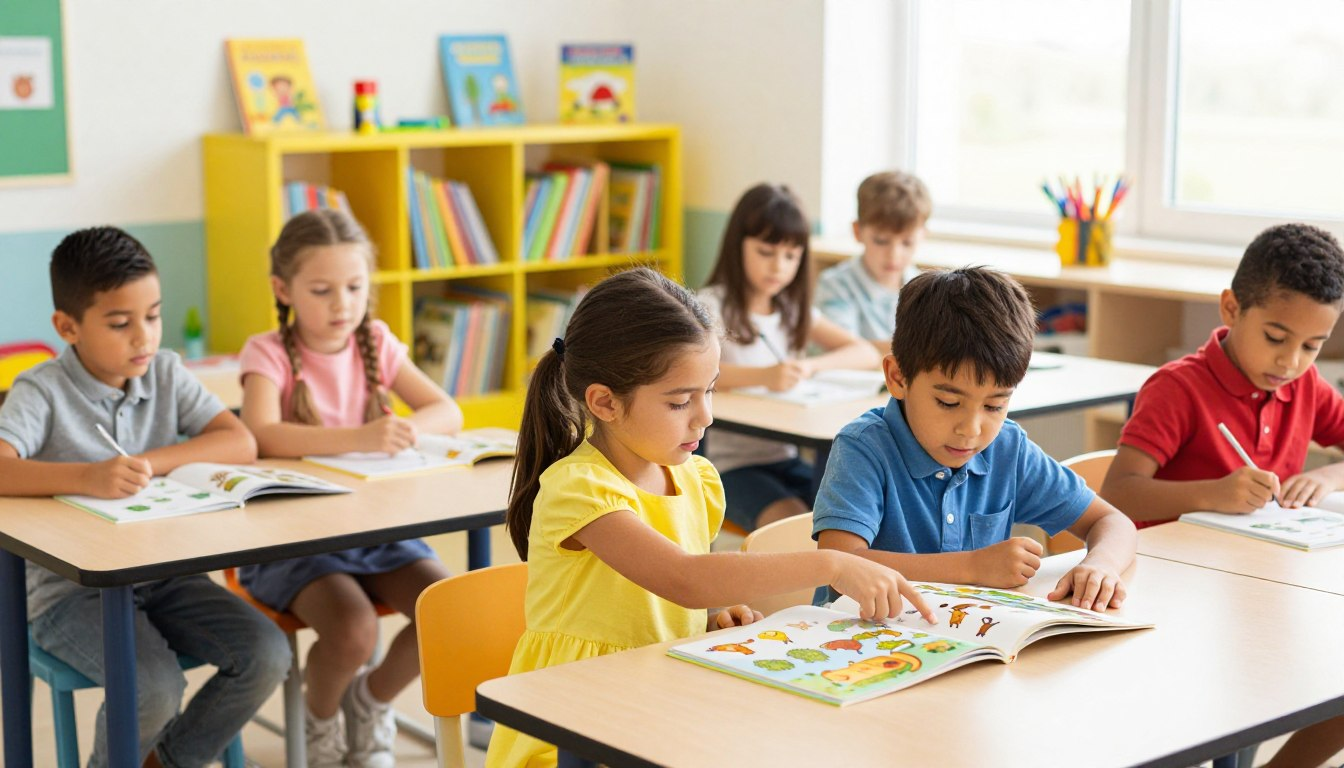
Developing deep understanding starts early. Doing kindergarten reading activities makes learning fun. It helps them understand the story better.
Focus on this skill to help your child get the main idea. Ask five specific questions next time. These simple prompts make story time a learning experience.
By starting early, you give them tools for success in every grade. It’s never too early to begin this journey to greatness.
Early literacy support helps children thrive. Your help now will prepare them for a lifetime of discovery and joy.
Why Reading Comprehension Matters in Kindergarten
When kids start kindergarten, they begin learning to read well. Reading comprehension is key to understanding written words. It’s not just about reading; it’s about making sense of what’s written.
Early literacy skills are very important for kids’ success in school. Reading comprehension is a big part of these skills. By teaching it in kindergarten, you help your child get ready for reading and learning later on.
Teaching comprehension early helps kids understand stories better. It also helps them think deeply about what they read and hear.
Kindergarten reading is more than just reading words. It’s about understanding what those words mean. By focusing on comprehension, your child will become a more thoughtful and engaged reader.
Reading comprehension is very important in kindergarten. It’s when kids start learning the skills they need for reading and more. By making comprehension a priority, you’re helping your child succeed in school for years to come.
Understanding Your Kindergartener’s Reading Development Stage

The kindergarten years are key for learning to read. It’s important to see how your child is doing. At this time, kids start to get the basics of reading.
Emergent Reader Characteristics
Emergent readers, like kindergartners, show signs of becoming good readers. They:
- Know text is read from left to right and top to bottom.
- See that print means something.
- Start to link sounds with letters.
- Know letters, numbers, and symbols are different.
Reading real stories is very important. It makes reading fun and exciting. Reading different stories helps kids love reading more.
What to Expect from Kindergarten Reading Skills
Kindergartners learn many reading skills. They start to know letters and understand simple stories. Here’s what they might do:
| Skill | Description | Example |
|---|---|---|
| Letter Recognition | Identifying uppercase and lowercase letters. | Naming the letter “A” when shown. |
| Phonological Awareness | Understanding that words are made up of sounds. | Identifying the beginning sound in “cat.” |
| Basic Story Understanding | Demonstrating an understanding of simple stories. | Retelling a story in their own words. |
Effective kindergarten reading strategies include reading aloud and talking about stories. Encourage them to guess what happens next. These actions help improve their reading and make it fun.
Knowing what emergent readers do and what to expect helps support your child. Reading together and watching their progress is very important. It makes a big difference in their reading journey.
Reading Comprehension for Kindergarten: Core Concepts
Supporting your kindergartener’s reading journey is key. Reading comprehension is more than just reading words. It’s about understanding what those words mean. Good reading skills start with basic skills learned early on.
Reading aloud to your child is very helpful. It shows how to connect with a story and ask questions. Reading aloud is fun for kids and helps them learn to think while reading.
Building Blocks of Early Literacy Skills
Early literacy skills are the base of reading comprehension. These include hearing sounds in words, knowing the alphabet, and understanding story structures. These skills help your child read and understand better as they grow.
- Phonemic awareness: The ability to hear and manipulate the sounds within words.
- Alphabet knowledge: Understanding the relationship between sounds and letters.
- Basic story structures: Recognizing the sequence of events and characters in a story.
The Connection Between Listening and Reading Comprehension
Listening and reading comprehension are closely related. Listening to stories helps your child understand and interpret them. This skill helps with reading comprehension too. Talking about stories with your child strengthens their listening and reading skills.
To improve reading skills, engage your child with the text. Ask open-ended questions and have them retell the story. This deepens their understanding and builds a love for reading.
Question 1: “What Happened in the Story?”

Reading with your kindergartener is fun. Asking the right questions helps them understand better. “What happened in the story?” is a great question to ask.
Why This Question Matters for Comprehension
Asking your child to tell you the story is key. It helps them remember and understand the order of events. This skill is important for making sense of stories.
Developing Recall Skills
Recall skills are basic for reading. By asking your child to remember the story, you help them keep and build on information.
Understanding Story Sequence
Knowing the order of events is vital. It helps your child follow the story and see how events connect. This skill is important for young readers.
How to Use This Question Effectively
Timing and following up are important for this question.
Timing Your Question
You can ask this question at different times. Asking right after reading helps them remember better.
Following Up for Deeper Understanding
Ask more questions to help them understand more. For example, ask why a character acted a certain way or what might happen next.
Here’s how to ask questions to help them think deeper:
| Initial Question | Follow-Up Questions | Benefits |
|---|---|---|
| What happened in the story? | What was the main event? Why did the character do that? | Develops recall and understanding of story sequence |
| Who was in the story? | What was their role? How did they relate to other characters? | Enhances character understanding and relationships |
Question 2: “Who Was in the Story?”

When you read with your kindergartener, asking “Who was in the story?” is key. It helps them focus on characters and their roles. This is important for understanding the story.
Why Character Identification Builds Reading Skills
Knowing characters is very important. It helps kids remember and understand characters. It also helps them follow the story better.
Connecting Characters to Actions
Knowing characters helps kids follow the story. They can tell you what the main character did. This is good for reading skills.
Remembering Multiple Characters
Stories have many characters. Remembering them is part of reading well. Asking “Who was in the story?” helps kids remember and describe characters.
Here’s a table showing characters and their actions:
| Character | Action | Role in the Story |
|---|---|---|
| Main Character | Performed the main action | Central to the plot |
| Supporting Character | Assisted the main character | Helped in plot progression |
| Antagonist | Opposed the main character | Created conflict |
How to Expand This Question
To make reading better, ask more about characters. You can talk about how they relate to each other.
Discussing Character Relationships
Ask your child about how characters interact. This shows how the story works. For example, “How did the main and supporting characters work together?”
Comparing Characters
Comparing characters makes kids think more. Ask how characters are alike or different. This helps their analytical skills.
By asking “Who was in the story?” and more, you help your child love reading more. It makes learning fun.
Question 3: “Where Did the Story Take Place?”
When you read with your child, ask about the story’s setting. This can really help them understand better. The setting is where and when the story happens. It’s key to following the story.
Why Setting Recognition Matters
Knowing the setting is important. It shows where the story is set. It also helps kids get better at reading pictures.
Understanding Context
The setting adds context to the story. It explains why things happen. For example, a snowy forest story is different from one set in a desert.
Visual Literacy Development
Talking about the setting helps kids look at pictures. They learn to understand what they see. This is a big part of kindergarten reading strategies.
Strategies for Teaching Setting Awareness
There are ways to help your child notice the setting in stories.
Using Picture Clues
Have your child look at pictures to find the setting. Ask them to describe what they see. How does it fit with the story?
Connecting Settings to Real Life
Link the story’s setting to your child’s life. For example, if it’s set in a park, talk about times they’ve been there.
Here’s a table to help your child compare different settings:
| Story | Setting | Real-Life Connection |
|---|---|---|
| The Little Red Riding Hood | Forest | Have you ever walked in a forest? |
| Goldilocks and the Three Bears | Cozy House | What does your home look like? |
By using these methods and making real-life connections, your child will understand story settings better. This will improve their reading skills.
Question 4: “How Did the Character Feel?”

When you read with your kindergartener, ask how a character felt. This question helps them understand the story better. It makes them think about the feelings in the story.
Why Emotional Literacy Enhances Comprehension
Emotional literacy means knowing and understanding feelings in yourself and others. When kids know how characters feel, they learn this important skill. This skill helps with empathy and learning about feelings, which are key for school and growing up.
Building Empathy Through Reading
Reading about characters’ feelings helps kids see things from different views. It helps them understand others better. This makes reading more fun and helps them understand better.
Understanding Character Motivation
Knowing how a character feels helps kids understand why they act certain ways. This is important for following the story and getting its message.
Teaching Emotion Recognition in Stories
To teach emotion recognition, use these strategies while reading:
- Point out facial expressions and body language in pictures.
- Talk about how characters’ feelings change in the story.
- Connect characters’ emotions to your child’s feelings.
Identifying Facial Expressions and Body Language
Many kids’ books show characters’ feelings through pictures. Use these pictures to help your child see how characters feel.
Connecting Feelings to Actions
Talking about how feelings lead to actions helps kids understand the story more. This is important for getting the story’s meaning.
Here’s a simple table to show how feelings lead to actions:
| Emotion | Possible Action |
|---|---|
| Happy | Share with others, smile |
| Sad | Cry, seek comfort |
| Angry | Yell, stomp away |
Question 5: “What Do You Think Will Happen Next?”
Asking your child to guess what happens next in a story helps them think better. This question makes them connect the story’s events and guess what’s next.
Why Prediction Skills Matter
Predicting what happens next is key to understanding stories. It’s not just about knowing the text. It’s about making smart guesses based on what’s already happened.
Developing Critical Thinking
When you ask your child to guess, you’re helping them think critically. They learn to analyze clues, find patterns, and make smart guesses.
Engaging Active Reading
Guessing what happens next makes reading more fun. It keeps your child interested and helps them understand and enjoy the story more.
How to Encourage Thoughtful Predictions
To help your child make good guesses, try these tips.
Using Story Clues
Teach your child to find clues in the story. These clues can be in the words or pictures.
Validating All Predictions
Always say your child’s guesses are right, even if they’re not. This makes them keep guessing without worrying about being wrong.
Here’s a simple table to help your child guess:
| Clue Type | Example | Prediction |
|---|---|---|
| Textual Clue | A character finding a mysterious object | The object might be used to solve a problem later |
| Illustrative Clue | A picture showing dark clouds | It might rain soon |
| Contextual Clue | A story about a character’s birthday | The character might receive a surprise gift |
By using these tips, you can improve your child’s guessing skills. This will make them better at reading and thinking critically.
Creating a Consistent Reading Routine with These Questions
A good reading routine is very important for kids. It helps them learn to read better. By using the five questions we talked about, you can help your kindergartener a lot.
Being consistent is very important. Asking these questions every day helps your child understand better. It also makes them love reading more.
When to Ask Each Question
It’s important to ask these questions in the right order. Start with “What happened in the story?” to see if they get the plot. Then ask “Who was in the story?” to help them remember characters.
Next, ask “Where did the story take place?” to teach them about setting. Then, ask “How did the character feel?” to learn about emotions. End with “What do you think will happen next?” to get them thinking ahead.
Adapting Questions for Different Book Types
Books are different, so you might need to change your questions. For example, if a book has lots of characters, spend more time on “Who was in the story?” and “How did the character feel?”
If a book has a hard plot, focus more on “What happened in the story?” Be ready to change your questions based on the book and your child’s answers.
Tracking Your Child’s Progress
Keep track of how your child is doing by using a reading log. Write down their answers and any areas they need work on.
This helps you see how they’re doing and make changes if needed. You can also celebrate their wins and help where they need it.
We have a FREE comprehension routine for you to start with. It works with any book, article, or passage. It will help you use these strategies well and see how your child improves over time.
Conclusion
Teaching your child to read well from a young age is very important. The five questions we talked about help kindergarten students get better at reading. They make reading fun and interactive.
Using these questions in your reading time can help your child understand stories better. It also helps them think critically and love reading more. These questions are great for parents and teachers to use.
We hope these questions help when you read aloud to your students. Adding them to your reading routine makes it fun and engaging. This will help your child read better for a long time.
FAQ
Q: Why should I focus on reading comprehension for kindergarten if my child is just starting to learn to read?
A: Reading comprehension is key for kindergarten. It helps your child understand that reading is about meaning, not just sounds. Early practice in reading strategies prepares them for more complex texts later on.
Q: What are the most effective kindergarten reading activities to improve comprehension at home?
A: The best activities are interactive “think-alouds.” Stop while reading classics like Where the Wild Things Are to ask about characters and story sequence. This makes reading a dynamic learning experience.
Q: How does listening comprehension relate to kindergarten reading development?
A: Listening and reading are closely linked in kindergarten. Listening to stories like The Day the Crayons Quit helps your child practice identifying plot and emotions. These skills are vital for reading later on.
Q: How can I help my child improve reading skills through character and setting identification?
A: Encourage your child to find clues in texts and pictures. Ask about characters and settings to help them understand the story. For example, Make Way for Ducklings by Robert McCloskey helps them visualize the story.
Q: Why is predicting the “next step” such a vital part of kindergarten reading strategies?
A: Predicting is a high-level thinking skill. Asking what will happen next keeps your child’s mind active. It’s a powerful strategy for reading comprehension, whether it’s a National Geographic Kids book or a story.
Q: How do I maintain a consistent routine for teaching reading to kindergarteners without making it feel like a chore?
A: Keep it short and fun! Use the five key questions during bedtime stories. This makes learning feel like a natural conversation. Consistency helps build literacy skills, and your child will grow in their reading abilities.