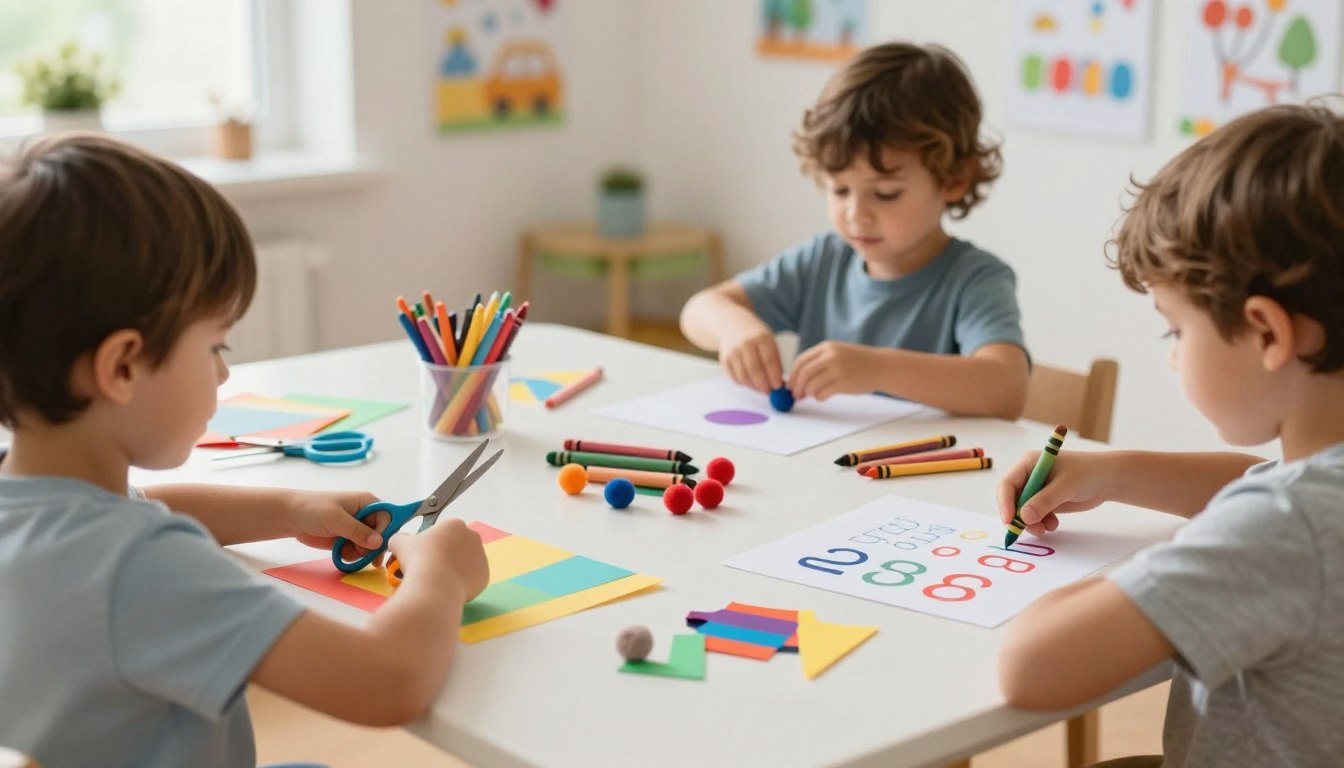
Maria Montessori once said, “The hand is the instrument of intelligence.” This shows how your child’s body growth helps their mind grow too. When kids play, they are making a key foundation for life.
Being able to use pencils, open things, and fasten clothes is important. These preschool fine motor skills need small muscles in the hands to work together. You can help grow these skills with simple actions every day.
Doing fine motor activities for 3 year olds helps your toddler feel sure of themselves. Using safety scissors or tracing lines helps with hand-eye coordination. These fun activities get your child ready for future academic success and being independent.
Key Takeaways:
- Develop precision and coordination through scissors and tracing.
- Enhance manual dexterity for essential tasks like dressing and feeding.
- Foster long-term academic readiness using engaging, play-based learning.
Why Fine Motor Skills Matter for Your 3-Year-Old
Three-year-olds need fine motor skills to be independent and coordinated. These skills help them do daily tasks and play. Occupational therapists focus on them because they’re key for self-care and fun activities.
Building Blocks for Future Learning
Fine motor skills are the start of bigger movements and tasks. They help your child write, use utensils, and dress up. This is important for school and growing up.
Independence in Daily Activities
When kids master fine motor skills, they can do things on their own. Like eating, using zippers, and playing with small toys. This makes them feel proud and helps them join in family fun.
Brain Development and Hand-Eye Coordination
Fine motor skills are linked to brain development and hand-eye coordination. Doing activities that improve these skills boosts your child’s thinking and moving. Catching a ball or playing a musical instrument needs hand and eye work. This gets better with practice.
What to Expect: Fine Motor Milestones at Age Three

When a child turns three, it’s a big deal for their fine motor skills. They start to get better at using their hands and fingers. This is important for doing everyday things and fun activities.
Typical Skills Your 3-Year-Old Should Be Developing
By three, kids get really good at using their hands. They can dress themselves better, use forks and spoons, and love to draw and color.
They also get better at using small things, like scissors. And they start to like building with blocks. These are all signs of growing fine motor skills.
Signs Your Child Is Ready for These Activities
Knowing when your child is ready for new skills is key. Look for signs like wanting to draw or dress themselves. They should also be able to handle small objects easily.
Watch for signs of wanting to do things by themselves. Or if they get upset when they can’t do something. These are signs they’re ready for more.
Understanding Individual Development Timelines
Every child grows at their own pace. Some might need more time to learn certain skills. Things like family background and how they learn can affect this.
Being patient and supportive is very important. Let your child try new things and celebrate their small wins. This helps them stay excited about learning.
Scissor Skills: Safe Cutting Activities for Beginners
Teaching your child to use scissors is fun and rewarding. It helps them improve their fine motor skills and hand-eye coordination.
Choosing Child-Safe Scissors and Proper Grip
Start with child-safe scissors for your child. These scissors have blunt tips and are easy to use. Show them how to hold the scissors correctly.
Practice opening and closing scissors together. This makes it fun and helps with finger dexterity.
Snipping Paper Strips and Fringe
Begin with simple tasks like cutting paper strips or fringe. This helps your child get better at using their fingers.
You can also make fringe by cutting slits in paper. Then, have your child cut along the fringe.
Cutting Along Straight Lines
When your child is ready, try cutting along straight lines. Draw lines on paper and have them practice cutting.
Start with lines that are far apart. Then, make them closer as your child gets better.
Progressing to Curved Lines and Simple Shapes
When your child is more confident, try curved lines and simple shapes. Guide them in cutting out these shapes.
This helps them get better at using scissors and improves their hand-eye coordination.
Safety Tips and Supervision Guidelines
Always watch your child when they use scissors. Teach them to keep their fingers away from the blades.
Also, tell them to never touch the sharp parts of the scissors. Make sure they cut on a stable surface.
By following these tips and practicing, your child will get better at using scissors. This will help them with more tasks in the future.
Pinching Activities to Strengthen Little Fingers

Make your child’s fingers strong with fun pinching games. These games help kids get better at using their fingers. They are great for learning to write and dress.
Clothespin Games and Transfers
Clothespin games are a fun way to improve pinching. Kids can pick up small things like pompoms with clothespins. Then, they can move them from one place to another. This makes their fingers stronger and helps their eyes and hands work together.
Using Tweezers and Kitchen Tongs
Using tweezers or tongs is another good way to practice pinching. Fill a container with small things like beads. Then, have your child pick them up with tweezers or tongs. This helps them get better at being precise and controlling their movements.
Playdough Pinching and Squeezing
Playdough is great for making fingers stronger. Kids can squeeze and pinch the dough. You can make shapes together, like rolling out the dough and making worms.
Sticker Peeling and Placement Activities
Peeling stickers and putting them on a surface is a fun activity. You can make a game by having your child put stickers on pictures. This helps their fine motor skills and encourages them to be creative.
Small Object Sorting with Fingers
Sorting small objects like beads with fingers is a good challenge. Fill a container with different objects. Have your child sort them by shape, color, or size. This makes their fingers stronger and helps them work together better.
| Activity | Benefits | Tips for Parents |
|---|---|---|
| Clothespin Transfers | Improves finger strength and hand-eye coordination | Start with large objects and gradually move to smaller ones |
| Tweezers and Tongs | Enhances precision and control | Use child-friendly tweezers and tongs for safety |
| Playdough Activities | Strengthens fingers and encourages creativity | Make or buy playdough that is not too sticky or dry |
“The way we engage with our children in activities that promote fine motor skills can significantly impact their development and future abilities.”
Early Childhood Expert
Adding these pinching activities to your child’s day can make their fingers stronger. Keep the activities fun to keep your child interested and excited.
Tracing Activities for Pencil Control and Precision

For 3-year-olds, tracing is fun and helps with pencil control. It helps kids get better at writing and drawing. These activities work for many ages and skill levels.
Beginning with Finger Tracing
Finger tracing is a great first step. It lets kids get used to tracing without a pencil. Start by having them trace simple shapes or lines in the air or on a surface with their finger.
Tracing Simple Lines and Shapes
When they’re ready, move to tracing on paper. This boosts their hand-eye coordination and fine motor skills. Start with straight lines and then try circles and squares.
Pre-Writing Practice with Letters and Numbers
As they get better, introduce tracing letters and numbers. It improves their fine motor skills and helps with writing. Start with big letters and numbers and make them smaller as they get better.
Sensory Tracing in Sand, Salt, or Shaving Cream
Try tracing in different textures like sand, salt, or shaving cream. It makes tracing fun and helps with sensory awareness and fine motor skills.
Using Different Tools for Variety
Using different tools keeps tracing interesting. Try crayons, markers, or paintbrushes. Each tool offers a new feel and challenge, keeping your child engaged.
| Tracing Activity | Skill Developed | Materials Needed |
|---|---|---|
| Finger Tracing | Basic Motor Control | None |
| Tracing Lines and Shapes | Hand-Eye Coordination | Paper, Pencil |
| Pre-Writing Practice | Letter and Number Recognition | Worksheet with Letters/Numbers |
| Sensory Tracing | Sensory Awareness and Motor Control | Sand, Salt, Shaving Cream, etc. |
Fine Motor Activities for 3 Year Olds: Additional Skills to Practice

There are many fun ways to help 3-year-olds improve their fine motor skills. These activities make their hands stronger and help them think creatively and solve problems.
Threading Beads and Lacing Cards
Threading beads and using lacing cards are great for improving hand-eye coordination. They need patience and precision, which are good for fine motor skills. Start with big beads and then try smaller ones as your child gets better.
Building with Small Construction Toys
Playing with small toys like LEGO DUPLO blocks or magnetic tiles is also good. Kids have to use their fingers to hold and connect pieces. This makes their hands stronger and helps them move better.
Painting with Cotton Swabs and Small Brushes
Painting with cotton swabs or small brushes is fun and helps with fine motor skills. It makes kids’ hands move in a precise way. Use washable paint and different surfaces like paper or canvas to make it more fun.
Working with Puzzles and Manipulatives
Doing puzzles and playing with shape sorters or stacking toys is fun and challenging. Kids have to use their fingers to solve the puzzles. This improves their problem-solving and hand-eye coordination.
Adding these activities to your child’s daily routine helps them grow. It gives them a strong base for school and life.
Setting Up for Success: Creating the Right Environment
Creating a good environment helps your child’s fine motor skills grow. It needs a few important things to help your child learn and grow.
Organizing Your Activity Space
Start by making your activity space neat. This means getting rid of distractions and keeping all needed stuff close. A clean space helps your child focus on tasks like cutting or tracing.
Have a special area for fine motor activities. It could be a table or countertop. Make sure it’s easy for your child to use on their own.
Choosing Age-Appropriate Materials
Picking the right materials is key. Choose tasks and materials that fit your child’s age. For a 3-year-old, think about safe scissors, playdough, and simple puzzles.
Think about what your child likes and can do. For example, arts and crafts can be fun and good for their skills.
Making Practice Time Enjoyable
Make practice time fun to keep your child interested. Use games and activities that are good for their fine motor skills and fun. For example, you can make cutting shapes into a game.
By making fine motor activities fun, your child will want to do them more. This helps them get better at these skills. Remember, it’s all about making it fun and rewarding for your child.
Practical Tips for Teaching Fine Motor Skills
Teaching your child fine motor skills needs patience and the right methods. When playing with your 3-year-old, support their learning but also let them try new things. This helps them learn and make mistakes.
Demonstrating and Guiding Without Taking Over
Show your child how to do a new activity, then let them try it. Guiding without taking over helps them feel confident and solve problems. For example, teach them how to hold scissors and make a few cuts, then let them practice.
Give verbal cues and gentle help when needed. Tell your child to keep trying, even if it’s hard at first. Patience is key because it might take many tries to get it right.
Managing Frustration and Building Confidence
Some kids get upset when they can’t do something right away. To help, break tasks into smaller steps and praise them often. Celebrating small wins boosts their confidence and keeps them motivated.
For example, if cutting straight lines is hard, start with simple paper strips. As they get better, you can add harder tasks.
Determining the Right Practice Frequency
Being consistent is key for fine motor skills. Practice regularly but in short sessions. This keeps your child interested and avoids getting too frustrated.
| Age | Practice Frequency | Session Duration |
|---|---|---|
| 3 years | 3-4 times a week | 10-15 minutes |
| 4 years | 4-5 times a week | 15-20 minutes |
When to Consider Professional Evaluation
If you worry about your child’s fine motor skills, know when to ask for help. See your pediatrician or an occupational therapist if you see big delays or trouble with fine motor tasks.
Some signs you might need help include:
- Having trouble with basic tasks like grasping or releasing
- Being very one-sided or having a strong hand preference
- Getting really upset or avoiding activities that use fine motor
Conclusion
Fine motor activities are key for 3 year olds. They help with school and daily tasks. Fun activities like using scissors and tracing improve their skills.
It’s important to make a space where your child can practice. This space should be fun and engaging. It helps with hand-eye coordination and finger dexterity.
Be consistent and patient with your child. They will learn these important skills. Adding fine motor activities to your day helps them grow and learn more.
FAQ
Why are fine motor activities for 3 year olds so important for my child’s growth?
These activities are key for motor development in young children. They help your child get ready for school and everyday tasks. By playing, your child gets better at using their hands and fingers.
How can I safely introduce age-appropriate fine motor tasks like using scissors?
Safety first when improving fine motor skills. Use Fiskars Safety Edge Scissors for your child. Start with playdough or paper to build hand strength.As they get better, try cutting straight lines. Then, move to more complex shapes.
What are some effective finger dexterity exercises to strengthen small hand muscles?
Pinching is great for fine motor activities for preschoolers. Use Play-Doh or Melissa & Doug tweezers for fun. These help with the pincer grasp, a key skill.
How do tracing activities help with toddler hand-eye coordination?
Tracing helps with writing. Use Morton Salt or shaving cream for tracing. It’s fun and helps your child control their hands.
What are the best fine motor activities for 3 year olds that involve common household items?
You don’t need special toys for 3 year old fine motor development. Try peeling stickers or sorting Post-it notes. These tasks improve hand-eye coordination and prepare for school.
How often should my child engage in preschool fine motor skills practice?
Short, regular practice is best. Aim for 10 to 15 minutes a day. Activities like building with LEGO DUPLO keep your child engaged and help their motor skills.
When should I consider a professional evaluation for my child’s motor development?
Watch your child’s progress in 3 year old fine motor development. If they struggle or show little interest, talk to a doctor or occupational therapist. They can check if your child’s skills are on track.