
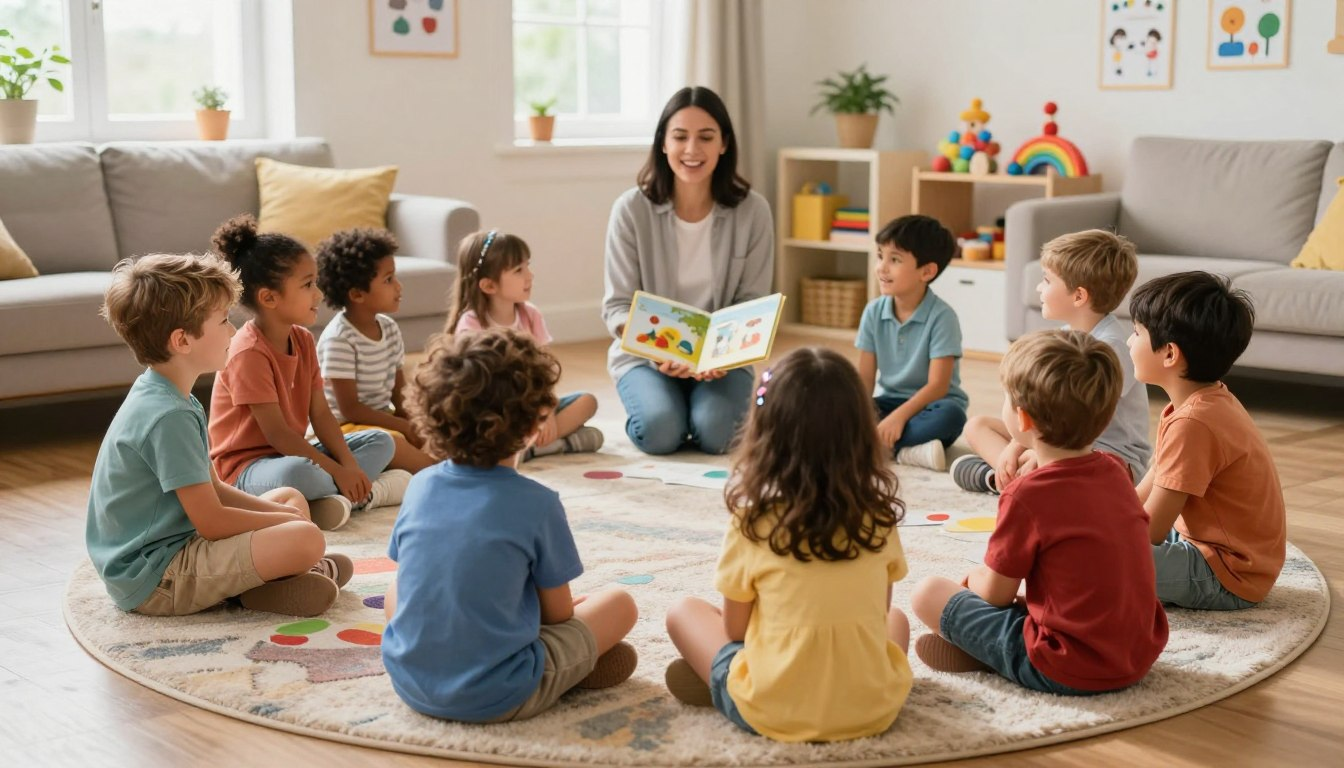
Do you remember those crazy mornings? Coffee gets cold while kids run around. You want to help their minds grow, but it’s hard.
A 15-minute circle time at home makes your day better. It helps kids feel safe and happy. It’s great for homeschooling or learning from home.
This guide will show you fun activities for a short routine. You’ll learn to improve early literacy and social skills. See how small habits make a big difference in your child’s life.
Seeing your child smile during a song is amazing. These moments help them learn and stay curious. You’re their first teacher, and you’re doing a great job.
Why Circle Time Matters for Your Preschooler’s Development
Circle time is very important for preschoolers. It helps them grow and learn. It’s not just a time to gather; it’s a time to feel connected and learn.
At its best, circle time helps with attention, feelings, memory, empathy, and reading. This sets a strong base for school success.
Building Social and Emotional Skills Through Group Activities
Circle time helps preschoolers learn important social and emotional skills. They learn to work together, share feelings, and understand others. These skills help them make friends and get along with adults.
Some key skills learned in circle time are:
- Sharing and taking turns
- Listening to others
- Expressing emotions through words
- Developing self-confidence
Cognitive Benefits of Structured Learning Time
Circle time is great for preschoolers’ brains. It improves their attention, memory, and problem-solving. Activities like checking the calendar and weather help them understand time and cause-and-effect.
| Cognitive Skill | Circle Time Activity | Benefit |
|---|---|---|
| Attention Span | Story time | Improves ability to focus |
| Memory | Reciting nursery rhymes | Enhances recall abilities |
| Problem-Solving | Interactive games | Develops critical thinking |
Creating Consistency That Helps Children Thrive
Consistency is very important for kids. Circle time gives them a daily routine. This makes them feel safe and know what to expect.
Adding circle time to your day helps your preschooler grow. It supports their social, emotional, and cognitive development. Circle time is a key tool for preschoolers.
Setting Up Your Circle Time Space at Home
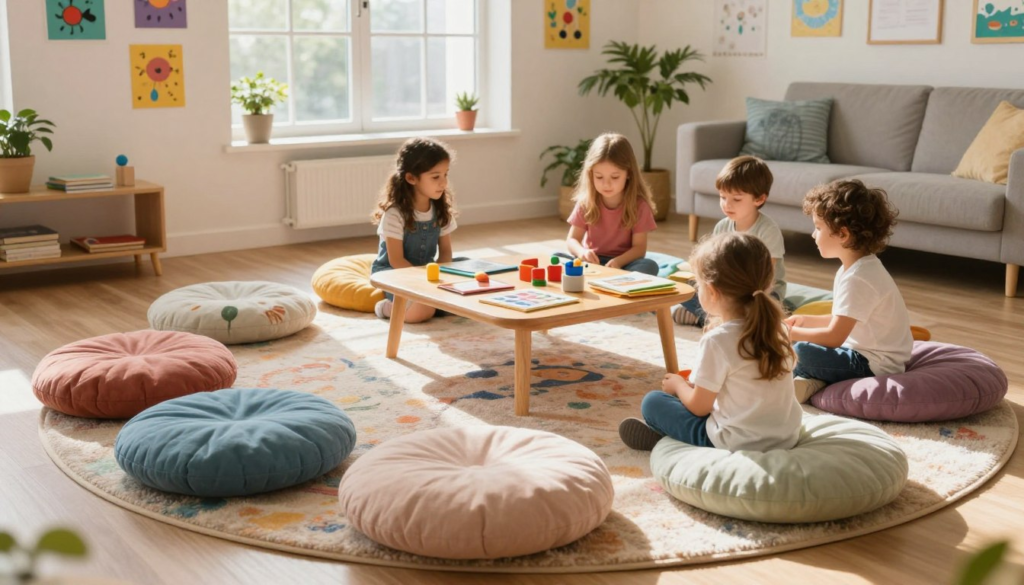
To enjoy circle time, make a cozy and quiet spot at home. A neat area boosts learning and keeps daily routines steady.
Choosing the Right Location in Your Home
Picking the perfect spot for circle time is key. Think about the floor and what might distract you.
Carpet Areas vs. Hardwood Floors
Think about your floors when picking a spot. Carpet squares are comfy and easy to store. Kids like them because they feel soft.
Keep distractions away and set clear rules in your spot. Stay away from busy areas and screens.
Essential Materials and Supplies You’ll Need
After picking a spot, get the right stuff. These things make circle time fun and organized.
Circle Time Carpet or Cushions
A comfy carpet or cushions are a must. They make the space cozy and help everyone sit together.
Visual Aids and Props
Visuals and props make learning fun. Use alphabet charts, number lines, and props that match the day’s lesson.
Storage Solutions for Easy Setup
Get bins or baskets for easy setup. They keep things tidy and within reach.
| Material | Purpose | Benefits |
|---|---|---|
| Carpet Squares | Comfortable seating | Easy to store, comfortable for children |
| Visual Aids | Enhance learning | Engage children, support lesson plans |
| Storage Bins | Organize materials | Easy setup, reduces clutter |
Creating a Visual Schedule Board
A visual schedule board is great for a circle time routine. It shows the order of activities and helps with transitions.
Using a visual schedule helps your child feel organized. They look forward to what’s next.
The Perfect 15-Minute Circle Time Structure
Circle time needs a clear plan to keep your preschooler’s attention. A good routine helps use time well for learning and growing.
Welcome and Greeting Song (2 minutes)
A welcome song at the start is great. It grabs the kids’ attention and makes them feel welcome.
Hello Songs That Build Connection
Hello songs help kids feel part of a group. Singing songs that call out each child’s name makes them feel seen.
Name Recognition Activities
Fun activities that teach names are good. You can sing songs with names or use flashcards to help remember names.
Calendar and Weather Check (3 minutes)
Talking about the calendar and weather teaches time and nature. It’s a basic but important lesson.
Days of the Week Practice
Using a calendar helps kids learn the days. Singing songs or reciting rhymes about the days is helpful.
Weather Observation and Discussion
Discussing the weather sparks curiosity. Simple questions like “Is it sunny today?” start interesting talks.
Main Learning Activity (5 minutes)
This part introduces new ideas or reinforces old ones. Activities should be fun and right for the child’s age.
Rotating Daily Themes
Changing themes daily keeps things interesting. Themes can be letters, numbers, shapes, or colors.
Age-Appropriate Focus Areas
Toddlers learn basic things like counting and colors. Older kids can learn more complex topics.
Movement or Music Time (3 minutes)
Movement or music is key for toddlers. It helps them move and improves their motor skills.
Closing and Transition (2 minutes)
A calm closing signals the end of circle time. It prepares kids for what’s next. A soothing song or simple activity works well.
Stick to this structure for a fun and educational circle time. Make sure activities are engaging and fit your child’s interests.
Circle Time at Home Activities That Keep Preschoolers Engaged
To keep preschoolers engaged at home, use many interactive activities. These make learning fun and help with social, emotional, and thinking skills.
Letter and Number Recognition Activities
Fun games can help kids learn letters and numbers. These games are the first steps to reading and math.
Alphabet Song with Visual Cards
Singing the alphabet song with cards helps kids connect letters with sounds. You can make or buy cards with letters.
Counting Games with Everyday Objects
Count toys or fruit to teach numbers. For example, count toy cars together and ask your child to say the number.
Letter of the Week Focus
Focus on one letter each week. Use house items starting with that letter for a hands-on learning experience.
Show and Tell Variations for Home Learning
Show and tell is great for home learning. You can make it fun and new.
Color Hunt Show and Tell
Ask your child to find something in the house by color. This game helps with color and vocabulary.
Favorite Toy Sharing Time
Let your child share their favorite toy. They can tell why it’s special. This helps with talking and social skills.
Story Time with Interactive Elements
Make story time fun with interactive parts. It makes everyone want to join in.
Picture Books with Repetitive Phrases
Choose books with phrases that kids can repeat. This helps with speaking and remembering.
Acting Out Stories Together
Acting out stories is fun and helps with creativity and understanding. Use simple props and let your child play different roles.
Hands-On Learning with Manipulatives
Hands-on activities are key for fine motor skills and learning complex ideas.
Shape Sorting Activities
Shape sorting games are great for problem-solving and learning shapes. Use wooden or plastic shapes and a board.
Pattern Building Games
Building patterns with blocks or chips teaches about sequences and prediction.
Adding these activities to your circle time makes learning fun and educational. Keep it varied and interesting for your child.
Best Circle Time Songs and Music for Preschoolers
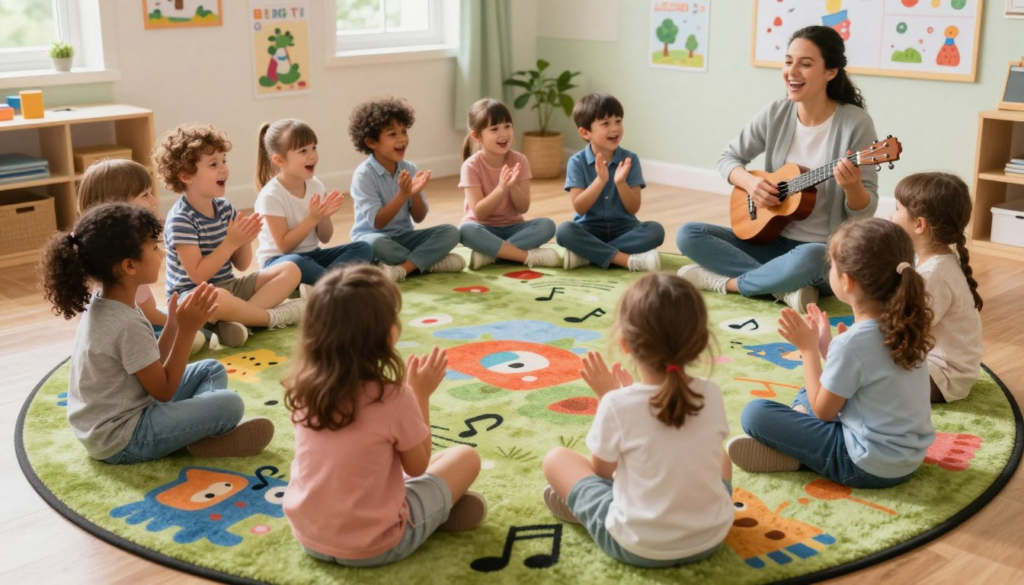
Circle time songs grab preschoolers’ attention and help them learn. Music boosts memory, language, and social skills. The right songs make learning fun and engaging.
Classic Welcome and Goodbye Songs
Familiar songs at the start and end of circle time make kids feel safe. These songs are fun and help kids feel part of the group.
Good Morning Song Variations
Good morning songs welcome kids to circle time. You can sing a special version, like: “Good morning, good morning, it’s time to learn and play, good morning to you!”
Goodbye and Transition Songs
Goodbye songs help kids move to the next activity. Songs like “The Wheels on the Bus” or “Clean-up, clean-up, everybody, everywhere” work well.
Educational Songs for Letters and Numbers
Educational songs teach preschoolers about letters and numbers. They make learning fun and help kids remember new things.
The Alphabet Song and Variations
The alphabet song is a circle time favorite. You can change the tempo or add actions to keep kids interested. Point to letters as you sing.
Five Little Ducks and Counting Songs
Counting songs like “Five Little Ducks” are fun and teach math. They help kids learn to count and understand numbers.
Movement and Action Songs
Movement songs get preschoolers moving and active. They help kids develop motor skills and have fun.
Head, Shoulders, Knees, and Toes
“Head, Shoulders, Knees, and Toes” is a classic song for movement. It’s a fun way to get kids laughing and active together.
If You’re Happy and You Know It
This song gets kids moving and shows different emotions. Sing: “If you’re happy and you know it, clap your hands!”
The Hokey Pokey for Active Play
“The Hokey Pokey” is a fun song for active play. It helps kids move and work together.
Seasonal and Theme-Based Songs
Seasonal and theme-based songs make circle time exciting. They match holidays, weather, or learning themes. This helps kids connect what they learn to real life.
For example, sing about snow in winter or flowers in spring. This makes learning fun and relevant.
Engaging Circle Time Games for Active Learning
Games in circle time make learning fun for young kids. They grab their attention and help them grow in many ways.
Turn-Taking Games That Build Patience
Turn-taking games teach kids patience and teamwork. They learn to wait and work together.
Pass the Beanbag Game
The Pass the Beanbag Game is easy but teaches a lot. Kids pass a beanbag while music plays. When it stops, they do a task or answer a question.
Roll the Ball Name Game
In the Roll the Ball Name Game, kids roll a ball and say names. It helps them know names and get along better.
Memory and Matching Games
Memory games boost brain power in preschoolers. They improve memory and focus.
What’s Missing from the Circle
Children lay out objects and close their eyes. One object is taken away. They then find the missing object, improving memory.
Simple Memory Card Activities
Simple memory games have cards that kids flip to find matches. It sharpens memory and focus.
Movement Games for Energy Release
Movement games help kids release energy and grow physically. They keep active and focused.
Freeze Dance Circle Style
Freeze Dance makes kids dance and freeze. It’s fun and helps with self-control.
Simon Says for Preschoolers
Simon Says is a classic game. It boosts physical activity and listening skills.
Sensory and Exploration Games
Sensory games wake up kids’ senses and spark curiosity. They’re key for learning and exploring.
Mystery Bag Guessing Game
The Mystery Bag Game tests guessing skills. Kids feel objects and guess what they are.
Sound Identification Activities
Sound games sharpen listening skills. Kids identify sounds, improving their hearing.
Adding these games to circle time makes learning fun and interactive for preschoolers.
Adapting Circle Time for Different Ages and Abilities
It’s important to make circle time fit for all ages and abilities at home. Kids grow at their own pace. So, we need to change circle time activities to meet their needs.
Circle Time Ideas for Toddlers (18 Months to 3 Years)
Toddlers need circle time that’s short and fun. It should be brief and positive to keep them interested.
Shorter Duration and More Movement
Circle time for toddlers should last 5-7 minutes. It should also have lots of movement. This helps them move better.
Simple Songs and Repetition
Toddlers like songs with the same words over and over. This helps them learn and makes it fun.
Circle Time for Older Preschoolers (4 to 5 Years)
Older preschoolers can handle longer, more complex circle time. It can be more structured.
Extended Activities and Discussions
They can talk more and do things like tell stories and play counting games. This helps them think better.
Pre-Reading and Writing Skills
Circle time can teach them about reading and writing. They can learn letters and simple writing. This helps them get ready for school.
Including Multiple Children of Different Ages
When there are kids of different ages, we need to make sure everyone feels included. It’s important to make them all feel valued.
Differentiated Activity Levels
We can do this by having activities for different ages. Older kids can help younger ones. This teaches them to work together.
Buddy System and Peer Learning
Using a buddy system is also good. It pairs older kids with younger ones. This helps them learn from each other and feel supported.
Making Virtual Circle Time Work for Remote Learning
Changing circle time for online learning is tough. But, with the right tools and plans, parents can make it fun and interactive for preschoolers.
Technology Setup and Tools for Success
To have a great virtual circle time, you need the right tech. Pick a good video call app and make sure your device has a clear camera and mic.
Zoom, Google Meet, or Skype Setup
There are many video call apps like Zoom, Google Meet, and Skype. Each has its own good points and bad points. It’s key to pick one that fits your needs.
Zoom is popular for circle time because it lets you share screens and is easy to use. Google Meet is great because it works well with Google apps and Google Calendar.
Camera Positioning and Lighting
Choosing the right video call app is just the start. You also need to think about camera placement and lighting. Your camera should be at a comfy height, and the light should be soft and natural.
Don’t put your camera right in front of a window. It can make the light too harsh. Try placing your camera at an angle or use a lamp for soft light.
Keeping Kids Engaged Through a Screen
It’s hard to keep preschoolers interested in virtual circle time. But, there are ways to do it. Interactive polls and digital show and tell are good ideas.
Interactive Polls and Digital Show and Tell
Interactive polls can make kids want to join in. Digital show and tell lets them share their favorite things with everyone.
Using Virtual Backgrounds and Props
Virtual backgrounds and props can make circle time more fun. You can use a fun background or props like stuffed animals to add a playful feel.
Screen-Free Virtual Circle Time Alternatives
Technology is great for virtual circle time, but it’s not the only way. You can use a phone or tablet to play music or videos. Or, you can make a virtual scavenger hunt.
Mixing tech with no-tech activities can make a great virtual circle time for preschoolers.
Conclusion
Circle time is key in early learning. It’s a special time for kids to share, learn, and grow together. Just 15 minutes a day can help your preschooler a lot.
Having a circle time routine makes things feel safe and steady. You can make it fun by adding songs and games. This helps your child learn in a fun way.
Follow the tips in this article to help your child grow. Make a circle time that fits your child’s needs. This will help them learn and grow in a fun way.
FAQ
How do I establish a consistent circle time routine in a busy household?
Start circle time at the same time every day. This could be right after breakfast. It helps your child know when it’s time to learn.Use a visual schedule board or make one yourself. It helps your child know what’s next. This makes them less anxious and more willing to cooperate.
What are the most effective preschool circle time activities for early literacy and math?
Choose fun activities like “show and tell” for a letter of the week. Or play counting games that are interactive.Use things like LEGO bricks or Melissa & Doug magnetic letters. They make learning fun and real for your child.
Do you have specific circle time ideas for toddlers who can’t sit still for 15 minutes?
Yes. For toddlers, make circle time about moving. Keep it short, 5 to 10 minutes.Include “wiggle breaks” and action prompts. For example, “jump the number of times I clap.” This keeps them active and learning.
Where can I find the best circle time songs to keep my child interested?
Look on YouTube or Spotify for great circle time songs. Super Simple Songs and The Learning Station have catchy tunes. They teach everything from days of the week to the alphabet.
Is virtual circle time effective for children involved in remote learning?
Yes, virtual circle time works well if it’s interactive. Use “unmute” moments for sharing or props that match what’s on screen.If your child gets tired of screens, try a “screen-free” lesson. Use an app like Khan Academy Kids for audio guidance.
How do circle time games help with social development?
Circle time games like “Simon Says” or “I Spy” teach important social skills. They help your child learn to take turns, listen, and be patient.These games also teach your child about following rules and the flow of conversation.
Why is circle time for preschoolers considered the foundation of a homeschool day?
Circle time is important for preschoolers. It helps them feel part of a group and safe to share their feelings.It also introduces the day’s themes and concepts. This sets the stage for learning in other activities.
How should I structure my circle time schedule to prevent boredom?
Mix passive listening with active doing in your circle time. A good 15-minute plan includes a welcome song, weather check, main activity, music or movement, and a transition.
What is the best way to set up circle time at home if I have limited space?
You don’t need a lot of space for circle time at home. A small rug or colorful sit-spots can work. Just make sure to remove distractions like TV and toys.

Written by
Nouhaila Benis
Hey! I’m Nouhaila a children’s education teacher with over 5 years of classroom experience across multiple countries. She specialises in early literacy and phonics, with one clear goal: helping every child become a confident, independent reader one word at a time. As a full-time blogger, I share with you my best personal experiences.