
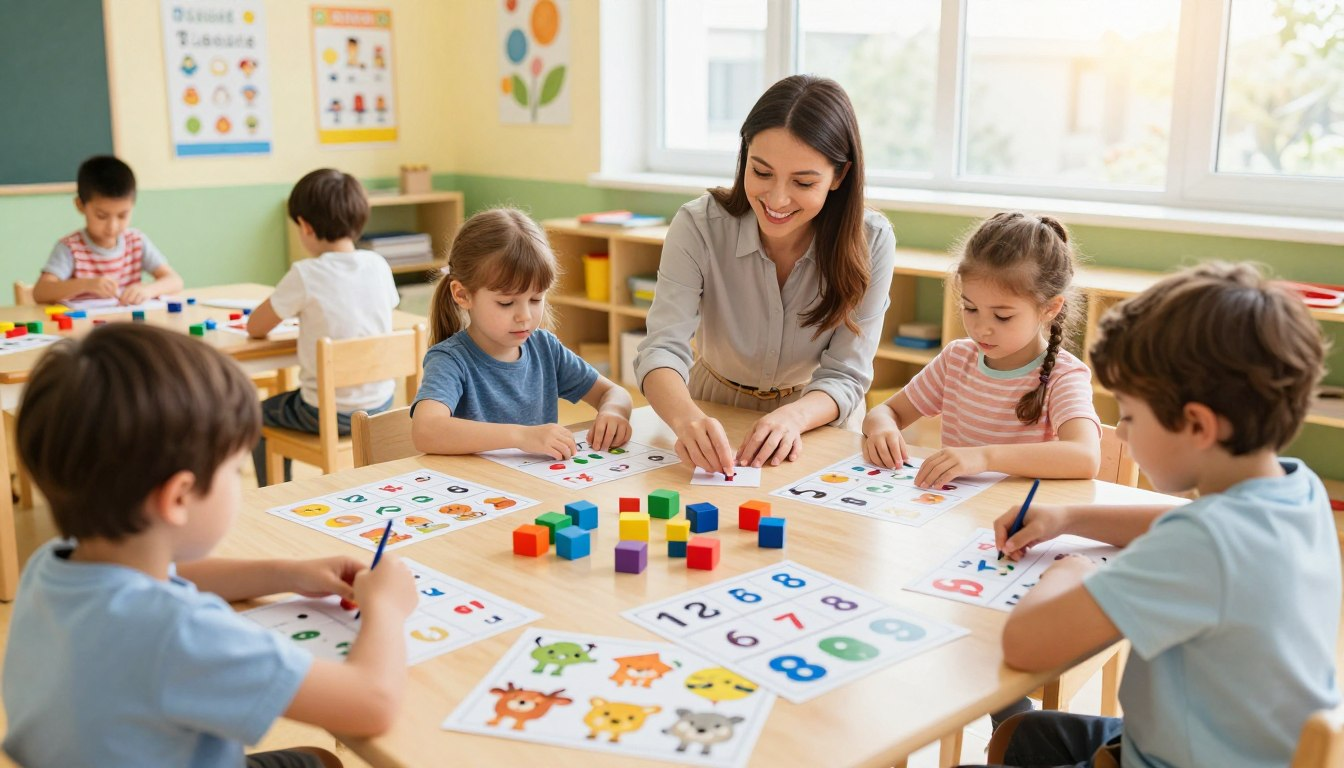
Number bonds are one of the most powerful early math concepts a kindergartener can learn — and one of the most underused at home. They teach children that every number is made of parts, and that those parts can be rearranged, split, and recombined. That understanding becomes the foundation for addition, subtraction, and eventually all mental arithmetic.
This guide explains what number bonds are, why they matter more than rote memorisation, when to introduce them, and how to teach them through hands-on activities, movement games, and creative exercises that feel like play rather than work. It also includes practical mini-assessment ideas so you can check understanding without making the experience feel like a test.
Key Takeaways
- Number bonds teach number relationships, not just number facts — which builds deeper and more lasting understanding than flashcard drilling.
- Start with numbers 5 and under before moving to 10, then teen numbers.
- Physical manipulatives — blocks, counters, Unifix cubes, egg cartons — are more effective than worksheets alone at this age.
- Five to ten minutes of daily practice produces better results than longer infrequent sessions.
- The ten frame is the single most useful visual tool for teaching bonds to ten.
- Assessment works best when it is embedded in games and daily conversation rather than formal quizzes.
What Are Number Bonds?
A number bond is simply a way of showing that a whole number is made up of two parts. The number 5, for example, can be made from 1 and 4, or 2 and 3, or 0 and 5. All of those combinations are number bonds for 5.
The visual model most commonly used is a simple diagram with the whole number at the top and the two parts branching below it — sometimes called a part-part-whole model. What makes number bonds different from simple addition facts is the emphasis on the relationship rather than the answer. A child learning that 3 + 2 = 5 knows one fact. A child who understands number bonds for 5 knows the whole family of relationships at once, including that 5 − 2 = 3 and 5 − 3 = 2, without needing to memorise each separately.
Number Bonds for 5, 7, and 10
| Whole Number | All Bonds (Part + Part) |
|---|---|
| 5 | 0+5, 1+4, 2+3, 3+2, 4+1, 5+0 |
| 7 | 0+7, 1+6, 2+5, 3+4, 4+3, 5+2, 6+1, 7+0 |
| 10 | 0+10, 1+9, 2+8, 3+7, 4+6, 5+5, 6+4, 7+3, 8+2, 9+1, 10+0 |
Number bonds to 10 are especially important because they underpin most mental arithmetic strategies children will use throughout primary school. A child who knows all the bonds to 10 automatically can use that knowledge to derive bonds to 20, 100, and beyond.
Why Number Bonds Matter
Number bonds are not simply an alternative way to teach addition. They develop number sense — the ability to understand numbers flexibly, see relationships between them, and work with them mentally rather than relying on counting on fingers or recalling memorised sequences.
A child with strong number sense knows that 8 + 5 can be solved by taking 2 from the 5 to make the 8 into 10, then adding the remaining 3. That strategy depends entirely on understanding number bonds. Without it, the child is left counting up from 8 — a slow and error-prone method that becomes increasingly unreliable as numbers get larger.
The Link to Addition and Subtraction
Every addition and subtraction fact is a number bond in disguise. When children understand that 4 and 3 are parts of 7, they automatically know four related facts: 4 + 3 = 7, 3 + 4 = 7, 7 − 3 = 4, and 7 − 4 = 3. Teaching addition and subtraction separately as two unrelated operations is significantly less efficient than teaching them together through number bonds from the start.
Number Bonds vs. Flashcard Drilling
Traditional flashcard drilling asks children to retrieve one isolated fact at a time. Number bonds ask children to understand the structure of a number — which produces more durable memory, better transfer to new problems, and far less anxiety around recall. A child who forgets a flashcard answer has nothing to fall back on. A child who understands the bond can reconstruct the answer through reasoning.
Getting Started: When and How to Introduce Number Bonds
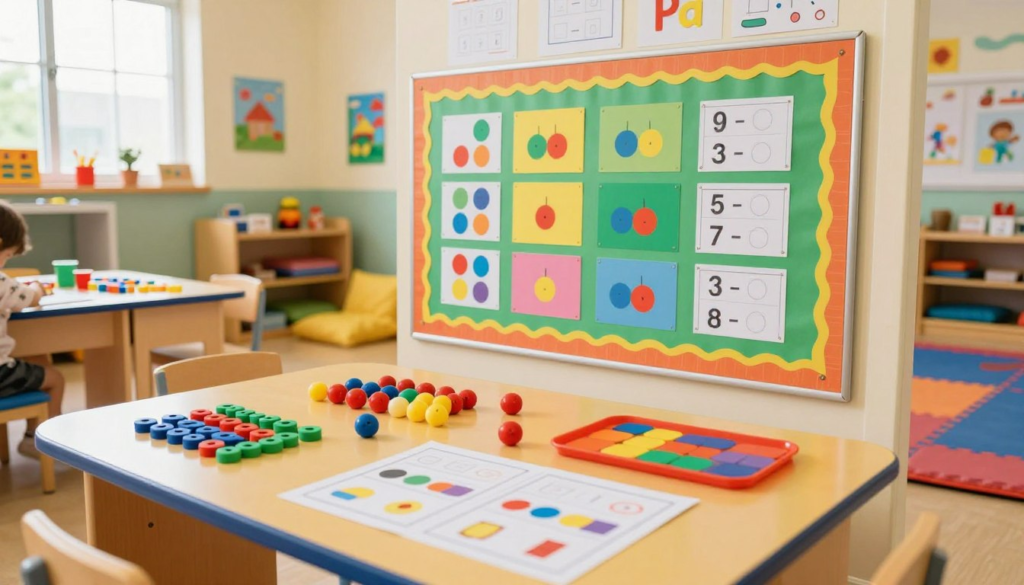
Number bonds are typically introduced in kindergarten, usually around age four or five, once a child can count reliably to ten and recognises numerals. The best indicator of readiness is not age but behaviour: a child who spontaneously counts objects, asks “how many,” or notices that splitting a group of toys into two piles produces two smaller groups is developmentally ready.
Start with Numbers 5 and Under
Do not start with bonds to 10. Begin with bonds to 3, then 4, then 5. These small numbers allow children to see all the combinations at once — there are very few — and build confidence before the quantity becomes visually harder to manage. Once bonds to 5 are solid and feel automatic, move to bonds to 6, 7, 8, 9, and finally 10.
Setting Up the Learning Space
A clear, uncluttered surface with only the materials for the current activity in reach is the most effective setup. Too many objects on the table compete for a young child’s attention. Keep a small container of manipulatives — counters, blocks, or buttons — a number line within sight, and blank paper for simple recording. That is genuinely all you need to begin.
Core Materials
| Material | What It Is | How It Supports Number Bonds |
|---|---|---|
| Counters or small objects | Buttons, beads, coins, pebbles | Children physically split and recombine groups to explore all bonds for a number |
| Unifix or linking cubes | Interlocking coloured blocks | Building and breaking towers makes part-whole relationships visible and tactile |
| Ten frame | A 2×5 grid for placing counters | Shows exactly how far from 10 a number is, making bonds to 10 visually clear |
| Number line | A horizontal sequence of numbers | Supports children in checking their thinking and self-correcting |
| Blank paper or whiteboards | Recording surface | Children draw their own part-part-whole diagrams after working with physical objects |
Hands-On Number Bond Activities
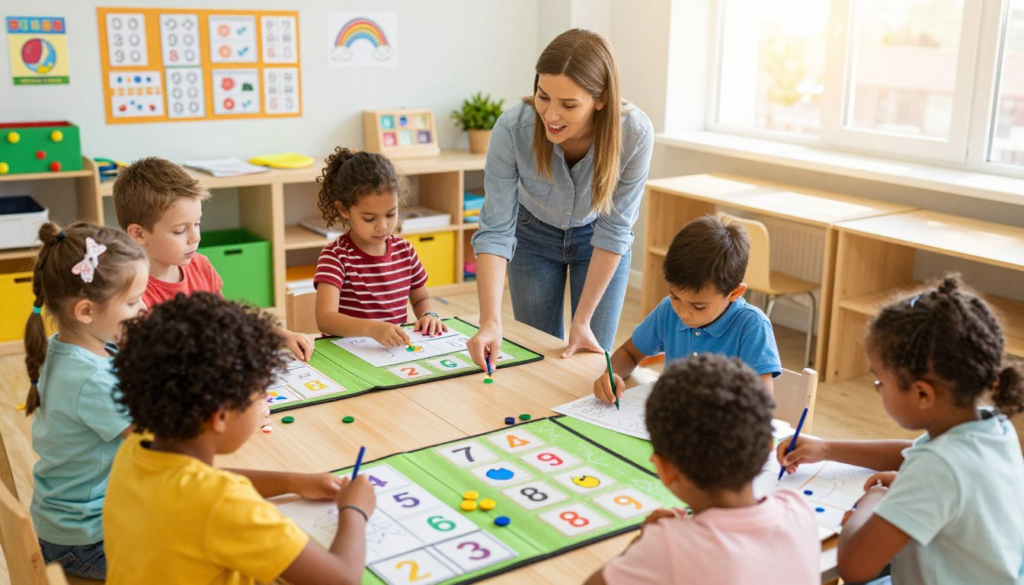
Physical manipulation of objects is the most effective way to teach number bonds at kindergarten age. When children move objects, split groups, and rejoin them, they experience the part-whole relationship in a way that a worksheet cannot replicate. The activities below require only common household materials.
Button Sorting and Splitting
Place five buttons in front of your child. Ask them to split the buttons into two groups any way they like, then tell you how many are in each group. Record what they find: “Three and two — that makes five.” Rearrange the buttons and ask them to find a different split. The goal is to find all possible combinations systematically, though at first children will find them randomly and that is completely fine. This activity works for any target number — simply change the total number of buttons.
Unifix Cube Trains
Build a train of eight Unifix cubes using two colours — four red and four blue, for example. Ask your child to snap the train into two pieces and identify how many are in each part. Reconnect and snap again in a different place. Using two colours makes the split visually obvious and helps children connect the physical action with the numerical relationship. Ask: “How many red? How many blue? How many altogether?”
Ten Frame Exploration
The ten frame is the most important single tool for teaching bonds to ten. Place seven counters in the frame and ask: “How many counters? How many empty spaces? How many do we need to fill it up?” The visual gap between the filled and empty spaces makes the missing part immediately obvious. Children who struggle to calculate 10 − 7 mentally often solve it instantly when they can see the frame. Use a printed ten frame or draw one on paper — two rows of five boxes is all it requires.
Egg Carton Number Bonds
Cut an egg carton down to hold your target number of eggs — six cups for bonds to 6, ten cups for bonds to 10. Drop small objects (counters, marbles, pebbles) into the cups one at a time and ask your child to count what is in the left half and the right half. The physical container divides the total naturally into two parts, making it easy for children to read off the bond without counting from scratch each time.
Lego Duplo Towers
Build a tower of six blocks using two colours. Pull it apart at different points and ask your child to record what they find: “Four yellow and two red — that is still six.” Duplo works especially well for children who find small counters fiddly because the larger blocks are easier to handle and the snapping action gives satisfying physical feedback.
Number Bond Games Your Child Will Ask to Play Again
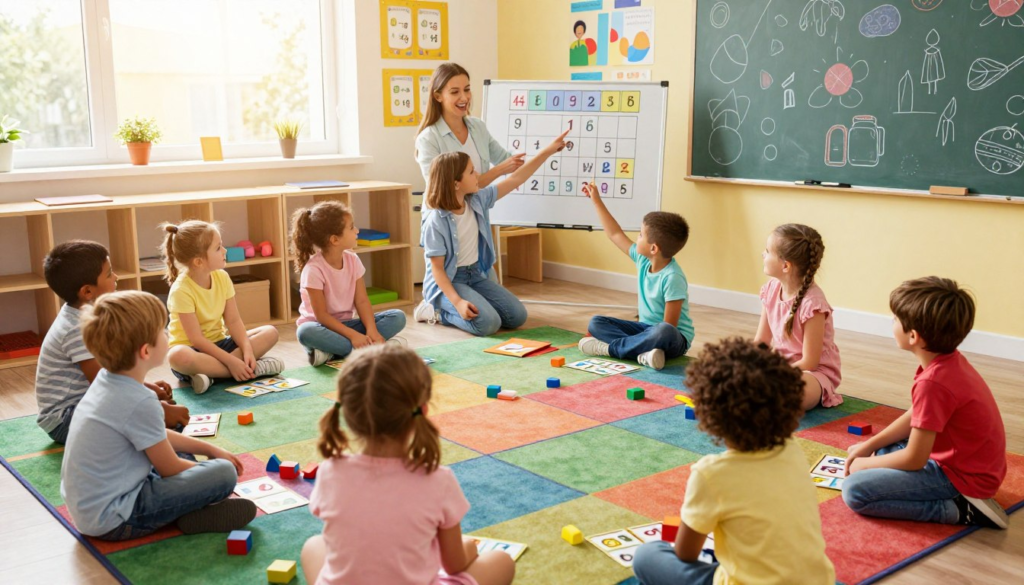
Games are a reliable way to get repetition without resistance. The activities below provide the same practice as worksheets but with significantly more engagement, movement, and genuine enjoyment.
Roll and Split Dice Game
Roll one die, read the number, then ask your child to split that many counters into two groups any way they like and tell you the bond. For example, rolling a 6 might produce “four and two.” Record it together. Roll again and find a different split for the same number, or move to a new number. Add a second die once bonds to 6 are comfortable, and use the total shown on both dice as the new whole number to split.
Number Bond Memory Match
Write number bond pairs on separate cards — one card showing “3” and a matching card showing “2 + 3 = 5,” for example. Shuffle and lay face down. Players take turns flipping two cards and trying to find a matching pair. This format builds both memory and number bond recognition simultaneously. Start with bonds for a single number (all the pairs that make 5, for example) and add more as knowledge grows.
Number Bond Fishing Game
Write numbers on card fish shapes and attach a paper clip to each. Make a simple fishing rod from a stick, string, and a small magnet. Spread the fish face down and ask your child to “catch” two fish that make a target number. Call out the target before each turn: “We are looking for fish that make seven.” This game works especially well because the physical action of fishing adds excitement that sustains attention across multiple rounds.
Hopscotch Number Bonds
Draw a hopscotch grid on the floor with tape or chalk (indoors or outdoors). Write a number in each square. Call out a target number and ask your child to hop to two squares that make the bond — for example, hopping to 3 and then 4 for a target of 7. Add the physical movement element and most children will play this repeatedly without ever feeling like they are practising maths.
Domino Number Bond Hunt
Spread a set of dominoes face up on a flat surface. Call out a target number and ask your child to find all the dominoes whose two halves add up to that number. For target 7, they would find the 1-6, 2-5, 3-4, and 7-0 dominoes. This is a self-checking activity — the dots on each half confirm whether the bond is correct — which builds confidence and independence.
Creative and Visual Number Bond Activities
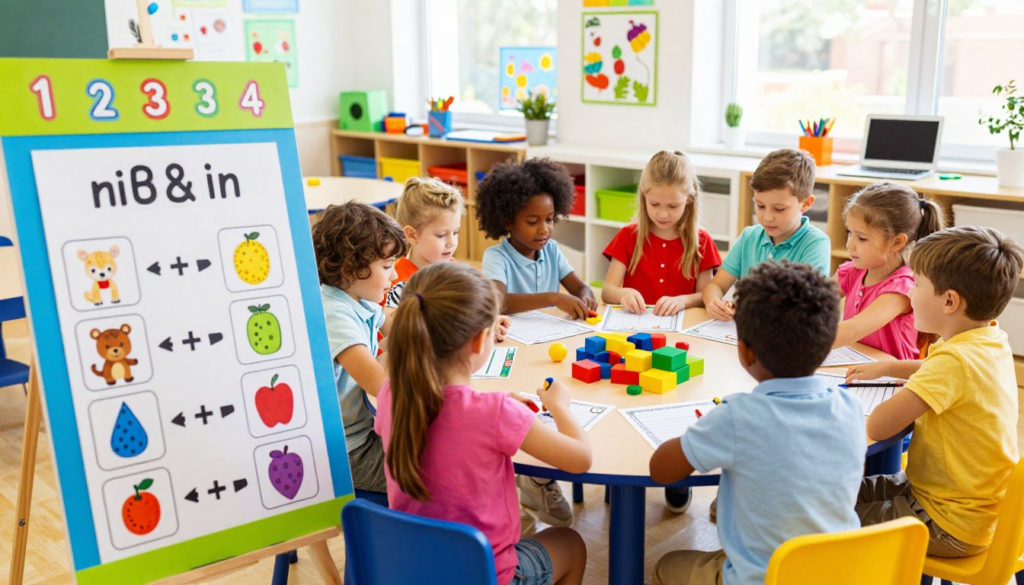
Creative activities extend number bond learning into drawing, making, and storytelling — which deepens understanding by connecting the abstract mathematical concept to something the child has built or imagined themselves.
Number Bond Trees and Flowers
Ask your child to draw a tree with a total number of apples — say, six — divided between those still on the tree and those on the ground. The tree becomes a visual part-part-whole model. A flower version works similarly: petals on the left of the stem and petals on the right. Both formats let children create their own representations of number bonds while engaging the drawing skills they already enjoy.
Playdough Number Bond Creations
Make or bring out playdough and ask your child to roll a total number of small balls — seven, for example. Then ask them to split the balls into two groups on either side of a line drawn on the table. Record what they found: “Five here, two there — five and two make seven.” Ask them to find a different split and record that too. The tactile experience of rolling and moving the balls reinforces the same motor memory that physical manipulatives build.
Number Bond Anchor Charts
Making an anchor chart together — rather than presenting a pre-made one — is significantly more effective for memory retention. Write the target number at the top of a large sheet of paper, then ask your child to find all the bonds and add each one to the chart themselves. Display it somewhere visible and refer to it during the week: “Can you find our seven chart? What does three and four make?”
Coloring Worksheets as a Consolidation Tool
Coloring-based number bond worksheets work well as a consolidation activity after children have explored a bond physically. A worksheet showing eight blocks with five shaded and three blank reinforces what the child already understands from hands-on work. Worksheets used before physical exploration, however, tend to produce surface-level responses rather than genuine understanding.
Assessing Number Bond Understanding
Formal tests are rarely the right format for assessing kindergarteners. The most useful assessments happen during play and conversation — when a child is relaxed, engaged, and answering naturally rather than performing under pressure. The goal of assessment at this stage is to identify gaps so you can address them, not to generate scores.
Verbal Checks During Daily Routines
Embedding quick questions into everyday moments is the most practical assessment approach for parents. While setting the table: “We need five forks — I’ve put out three already. How many more do we need?” While dividing a snack: “There are six crackers. You have four — how many do I have?” These questions reveal exactly what a child knows without any setup at all.
Simple Worksheet Mini-Quizzes
For children who enjoy writing, short printed tasks provide a useful record of what they know at a given point in time. Three formats work particularly well:
- Fill in the missing number: “2 + ___ = 5.” This tests whether the child can work from a partial bond to find the missing part.
- Circle the correct bond: Show several options for a given number and ask the child to circle the ones that are correct. For example, “Which of these make 6? 2+4 / 3+2 / 1+5 / 2+3.”
- Match the bond: Draw a line from each equation to its answer. This works well as a cut-and-paste or draw-a-line task and is usually more engaging than fill-in-the-blank alone.
Game-Based Assessment
Any of the games described above can function as an assessment tool if you watch carefully and note what the child does confidently versus what requires hesitation, counting on fingers, or prompting. A child who immediately recognises “three and four make seven” has automatised that bond. A child who needs to count the objects has not yet done so, and needs more physical practice before moving to faster recall.
Tracking Progress Simply
A simple tracking sheet — one row per number bond family, dated when the child demonstrates confident knowledge — gives a clear picture of what has been secured and what still needs work. Celebrate each completed row explicitly. Children at this age are strongly motivated by being able to see their own progress in a tangible form.
Tips for Teaching Number Bonds Successfully
Keep Sessions Short and Daily
Five to ten minutes of focused number bond practice every day is more effective than a thirty-minute session once a week. Short daily repetition builds the kind of automatic recall that supports mental arithmetic, while longer infrequent sessions tend to cover more ground but retain less. If the activity is going well and your child is engaged, stop anyway — ending on a positive note makes the next session easier to begin.
Connect Bonds to Real-Life Situations
Number bonds become more meaningful when children encounter them in authentic contexts. Dividing a handful of grapes between two people, splitting toy cars into two garages, or deciding how many more steps until a total is reached all create natural number bond moments. These real-life applications are particularly valuable because they show children that the maths they are learning is genuinely useful — not just something that happens at a desk.
Common Challenges and Solutions
| Challenge | What It Usually Indicates | Suggested Approach |
|---|---|---|
| Child always counts from 1 to find the answer | Bonds not yet automatic — still needs physical support | Return to manipulatives; reduce the target number temporarily |
| Child struggles specifically with bonds to 10 | Quantity too large to visualise mentally | Use a ten frame consistently; make the visual “gap” the focus |
| Child loses interest quickly | Activity is too repetitive or too easy | Switch formats — game instead of worksheet, or movement instead of tabletop |
| Child gets frustrated when making mistakes | Pressure around performance | Remove recording and return to pure physical exploration with no right/wrong framing |
| Child finds bonds easy but resists practice | Ready to progress | Move to higher target numbers or introduce the subtraction connection explicitly |
Use Positive Reinforcement Specifically
The most effective positive reinforcement names what the child did, not just that they did well. “You remembered straight away that three and two make five — you did not even need to count” is more useful than “Good job.” The first message teaches the child what success looks like and what to repeat; the second tells them only that the outcome pleased you.
FAQ
What age should I start teaching number bonds?
Most children are ready to begin exploring number bonds around age four or five, once they can count reliably to ten and show interest in numbers and quantities. Readiness is more important than age — start when your child is curious, not because the calendar says it is time.
Why are number bonds better than flashcards for this age?
Flashcards test the retrieval of isolated facts. Number bonds build understanding of how numbers are structured. A child who understands bonds does not need to memorise every addition and subtraction fact separately — they can reconstruct any fact from their understanding of the relationship, which is faster, more reliable, and more useful across a wider range of mathematical tasks.
How long should each practice session be?
Five to ten minutes daily is the most effective pattern for kindergarten-age children. Stopping before the child is tired or frustrated preserves enthusiasm for the next session and avoids the negative associations that longer, pressured sessions can create.
My child struggles specifically with bonds to 10. What should I do?
Ten is the most important and the most visually demanding number at this level. Introduce a ten frame if you have not already — the physical gap between filled and empty spaces makes the missing part immediately visible in a way that no verbal explanation can replicate. Use two clearly different colours of counter (five of one colour, five of another) to reinforce the 5 + 5 structure of the frame, which gives children a reliable reference point for all bonds to 10.
Are there free resources available online?
Yes. Khan Academy Kids, PBS Kids, and Mathseeds all offer free number bond activities and printable worksheets. Many teachers also share free ten frames, part-part-whole templates, and number bond worksheets on Teachers Pay Teachers. That said, the most effective early number bond work requires physical objects more than digital resources — prioritise manipulatives over screens at this age.
How do I know when my child is ready to move on to larger numbers?
Move on when your child can produce all bonds for a given number quickly and without counting — when the answer comes immediately rather than after a pause. Rapid, confident recall of bonds to 5 is the signal to introduce bonds to 6 and 7. Rapid recall of bonds to 10 is the signal to begin exploring teen numbers and eventually bonds to 20.

Written by
Nouhaila Benis
Hey! I’m Nouhaila a children’s education teacher with over 5 years of classroom experience across multiple countries. She specialises in early literacy and phonics, with one clear goal: helping every child become a confident, independent reader one word at a time. As a full-time blogger, I share with you my best personal experiences.